
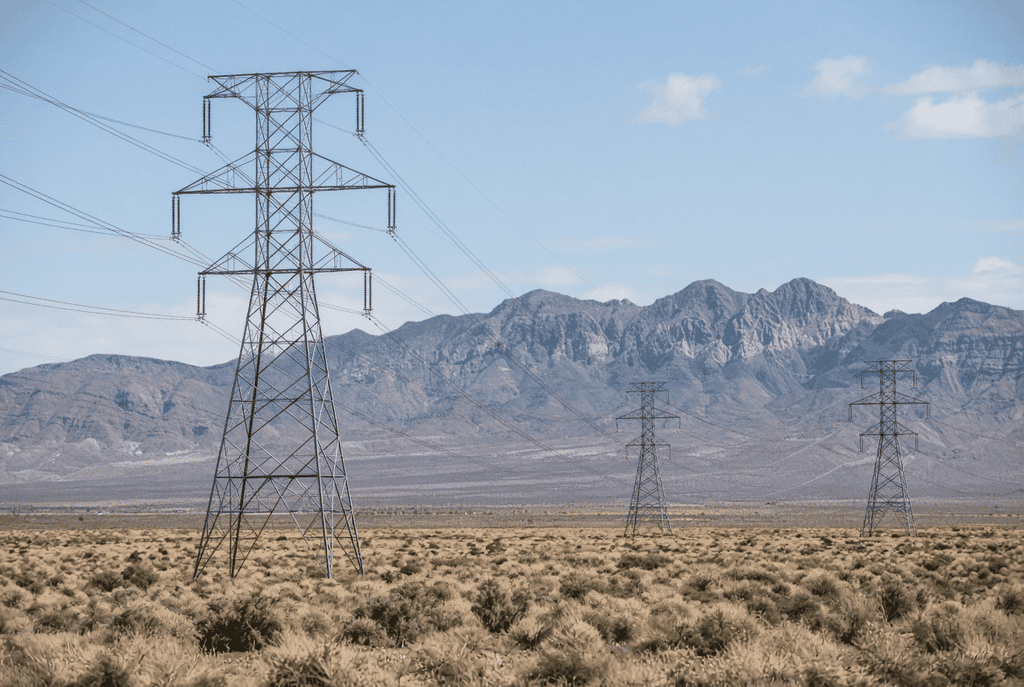
Nevada has some of the strongest solar resources in the country, but its highest-quality sites for utility-scale solar are located in remote desert valleys, distant from the population centers that consume the power. Greenlink Nevada, NV Energy’s multi-billion-dollar transmission initiative, is designed to address that constraint.
By constructing hundreds of miles of new high-voltage lines connecting Las Vegas, Reno, Yerington, and Ely, the project creates a high-capacity path that enables remote desert solar and storage resources to serve customers across the state. When integrated with existing lines, Greenlink also provides a second major north-south backbone for the grid, improving statewide reliability and supporting the physical infrastructure needed to meet the state’s 50 percent by 2030 Renewable Portfolio Standard.
Note: To keep up with fast-moving solar trends in Nevada, I use AI tools to help with research and writing. Every post is personally reviewed and edited by me.
What Greenlink Nevada Is
Greenlink Nevada is NV Energy’s multi-billion-dollar transmission initiative to expand and modernize the state’s high-voltage grid. It is not a single line but a statewide network organized around two primary 525-kilovolt (kV) backbone segments, connected by supporting lower-voltage lines. These corridors are designed to provide the high-capacity pathways needed to deliver large volumes of remote desert solar and energy storage to the state’s major load centers.
Greenlink West forms the western high-voltage backbone of the new transmission network. The approximately 350-mile route runs north from the Las Vegas Valley to the Yerington area in Lyon County, where it connects with NV Energy’s existing Fort Churchill infrastructure. The line is designed at 525 kilovolts (kV) to move large volumes of power efficiently across long desert distances. Construction is underway along major segments of the corridor, including access roads, transmission structures, and substation work. A key facility is the Walker River Substation near Yerington, one of the largest substation projects in NV Energy’s history, which is intended to serve as a central interconnection point for remote renewable generation.
While Greenlink West connects the Las Vegas Valley northward, Greenlink North covers the eastern and central portion of the state. The approximately 235-mile segment runs from the Robinson Summit area near Ely westward to the Yerington hub and is also designed as a 525-kilovolt (kV) line. From Yerington, the project adds three new 345-kV transmission lines extending toward Reno and Storey County. These connections integrate the new high-voltage triangle with Nevada’s existing northern electrical system and complete a statewide loop.
Once construction is complete, Greenlink West, Greenlink North, and the existing One Nevada Transmission Line (ONWI)—which runs along the eastern side of the state—will form a high-voltage transmission triangle. Electricity will be able to flow over multiple paths between northern and southern Nevada rather than depending on a single corridor. This redundancy improves grid reliability by allowing power to continue moving if one path is constrained by weather, maintenance, or an outage.
NV Energy has described the initiative as a renewable energy highway because it provides transmission access to remote desert areas that previously lacked sufficient capacity to deliver power to urban load centers. Project filings and Bureau of Land Management (BLM) environmental reviews indicate that the newly accessible corridors could support roughly 4,000 megawatts of undeveloped renewable potential, creating the high-capacity pathways needed to deliver that generation to the grid.
The total capital cost of Greenlink is currently estimated at approximately $4.2 billion. That investment is recovered through standard utility rates, with a substantial share allocated to Southern Nevada customers, where load growth is concentrated. The project was first advanced years before the recent surge in data-center interconnection requests. While hyperscale data centers will use capacity on the lines, Greenlink is general system infrastructure. It was designed to improve statewide reliability, deliver remote renewable energy, and support long-term economic development rather than to serve as a dedicated line for individual large loads.
How the Two Lines Work Together
Greenlink West and Greenlink North are designed to operate as complementary segments of a single statewide network. Greenlink West is further advanced: construction is underway along its roughly 350-mile corridor from the Las Vegas Valley to the Yerington hub. NV Energy’s current target is to place the line in service in May 2027. Visible progress includes access roads, steel transmission structures, and the Walker River Substation near Yerington, which is intended to serve as the primary interconnection point linking both new 525-kV corridors into the existing northern system.
Greenlink North is the second major phase of the network. The roughly 235-mile segment runs from the Robinson Summit area near Ely to the Yerington hub. Because much of the route crosses federal public lands, environmental reviews and associated Bureau of Land Management (BLM) permitting are still underway, with a targeted in-service date at the end of 2028. Once both 525-kV corridors are energized, they will operate together with the existing One Nevada Transmission Line (ONWI), which runs along the state’s eastern corridor, to complete a high-voltage transmission triangle. The resulting network will provide two independent high-voltage pathways between northern and southern Nevada, improving regional reliability.
Completing the transmission triangle provides operational flexibility. Electricity generated in western or central Nevada can flow south toward Las Vegas or north toward Reno over multiple paths. If one corridor is constrained by maintenance, weather, or an outage, power can be redirected over the remaining path. The additional 345-kV lines from the Yerington hub toward Reno and Storey County connect the new high-voltage network to Northern Nevada’s major industrial and urban load centers. With capacity designed to support several thousand megawatts of new renewable generation, Greenlink provides the transmission scale needed to improve grid reliability and deliver the renewable energy required to meet the state’s long-term RPS obligations.
Transmission capacity is only part of the buildout; large generation projects are advancing in parallel. One example is the Libra Solar project in Mineral County, a 700-megawatt (MW) solar array paired with battery storage that is designed to interconnect via Greenlink West. As the new transmission corridors enter service, additional solar-plus-storage projects are expected to develop in Nevada’s remote desert valleys. Project timing is closely linked to the transmission schedule. Because Greenlink West is targeted for May 2027 completion, generation projects that depend on the western corridor can begin delivering power in the 2027–2028 window. Projects that rely on Greenlink North will come online later, consistent with that segment’s later in-service date.
Unlocking Desert Solar That Couldn’t Reach the Grid
Nevada’s strongest solar resources are concentrated on large areas of public land managed by the Bureau of Land Management (BLM), often tens or hundreds of miles from the existing high-voltage transmission lines that serve Las Vegas and Reno. Without nearby transmission capacity, these sites cannot be developed at scale. Interconnection studies that identify significant grid congestion and high upgrade costs have caused projects to stall or shift elsewhere. Greenlink is intended to address this constraint by providing high-capacity corridors that bring remote desert solar resources within reach of the existing grid.
NV Energy and Bureau of Land Management (BLM) planning documents have described the project as a means of providing transmission access to remote, high-resource desert areas. Early estimates indicated roughly 4,000 megawatts of undeveloped renewable potential, predominantly solar. Subsequent BLM environmental impact statements indicate that the combination of Greenlink West approvals and related generation projects could open access to on the order of 4.7 gigawatts (GW) of renewable capacity.
That figure is an engineering estimate of the generation that becomes physically reachable once the new 525-kV lines and substations are energized; it is not a guarantee that every megawatt will be built. For developers, the change is significant: projects that previously faced multi-year queue delays or high network upgrade costs can now propose interconnections at or near the new transmission backbone.
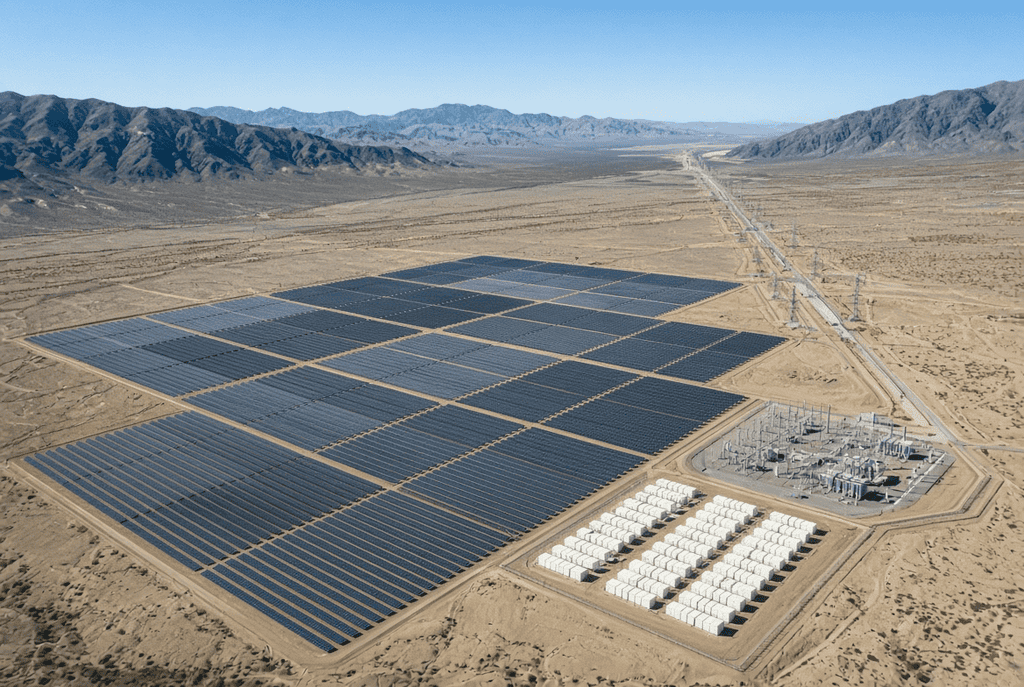
The Libra Solar project in Mineral County illustrates the relationship between new transmission and large-scale renewable development. Located on BLM public land, the project consists of a 700-megawatt (MW) photovoltaic array paired with a 700 MW / 2.8 gigawatt-hour (GWh) battery energy storage system. Its power-purchase agreement (PPA) with NV Energy and its target commercial operation date are linked to the completion of Greenlink West.
Once the high-voltage lines are in service, additional large solar-plus-storage projects are expected to advance along both the West and North corridors as permitting progresses. Because Greenlink is designed as a high-capacity, long-distance transmission backbone, it can accommodate large injections of renewable power without requiring every developer to construct a lengthy generator-tie line to a distant substation.
Battery storage is an integral part of the same infrastructure development. Nearly every solar project currently proposed along these remote desert corridors includes multi-hour battery storage. High-capacity transmission allows both midday solar generation and energy discharged from storage in the evening to reach urban load centers. This supports RPS compliance by delivering renewable energy credits and improves grid reliability by shifting renewable output into peak evening demand periods. Without Greenlink, a larger share of Nevada’s renewable development would be constrained to areas near existing infrastructure, where available land is limited and local interconnection capacity is largely exhausted.
Direct Link to the 50% by 2030 Renewable Portfolio Standard
Nevada’s Renewable Portfolio Standard (RPS) requires NV Energy to supply 50 percent of its retail electricity sales from eligible renewable resources by 2030. The state implements this through a stepped compliance schedule: 34 percent through 2026, 42 percent for 2027–2029, and 50 percent beginning in 2030. Compliance is tracked using Portfolio Energy Credits (PECs), Nevada’s version of renewable energy credits, where one credit generally represents one megawatt-hour (MWh) of eligible generation. Each year, NV Energy must retire enough credits to cover the required percentage of its retail sales. Surplus credits generated in years of higher output may be banked and applied toward future compliance obligations.
Nevada’s Renewable Portfolio Standard (RPS) is calculated as a percentage of retail sales rather than a fixed megawatt target. As a result, when total retail electricity sales increase—whether from ordinary population growth or large new commercial loads—the absolute number of Portfolio Energy Credits (PECs) NV Energy must acquire rises in proportion. Recent resource planning documents indicate that this combination of a rising percentage requirement and expanding electricity demand produces a tighter credit balance beginning around 2027. NV Energy has a strong historical record of exceeding its compliance obligations, routinely reporting figures well above the required thresholds. Sustaining that performance will depend on bringing new, deliverable renewable generation online.
Greenlink functions as enabling infrastructure rather than as a credit-generating resource. The transmission lines themselves produce no Portfolio Energy Credits (PECs). Their purpose is to provide high-capacity pathways that allow remote solar and solar-plus-storage projects in high-resource desert areas to interconnect and deliver both energy and credits to the grid. NV Energy planning materials and public utility filings link these new transmission corridors to progress toward the state’s RPS and broader carbon-reduction goals. Without the added transfer capacity, a larger share of the required credits would need to come from already-congested local sites or from out-of-state resources, both of which face physical limits on available grid capacity and higher associated costs.
Timing is a material factor in meeting the state’s renewable requirements. Portfolio Energy Credits (PECs) from projects that will use Greenlink West are expected to begin contributing in the 2027–2028 window, coinciding with Nevada’s step-up to a 42 percent RPS requirement. Generation assets that depend on Greenlink North are not expected until closer to the 2030 threshold. This sequencing leaves limited margin. Construction delays on either transmission segment would push associated clean energy deliveries later, reducing compliance flexibility at the same time the statutory percentage is increasing. NV Energy’s Integrated Resource Plan (IRP) scenarios treat both transmission availability and project commercial-operation dates as variables that affect year-by-year compliance outcomes.
Timeline, Status, and Practical Realities
Greenlink West is the more advanced of the two segments and serves as the nearer-term component of the network. Construction is underway along portions of its roughly 350-mile corridor, including erection of transmission structures, construction of access roads, and major work at the Walker River Substation near Yerington. NV Energy’s target is to place the line in service by May 2027. That target has remained in place in company updates, even as individual work zones have experienced temporary adjustments.
One such adjustment occurred in late 2026, when heavy equipment was voluntarily removed from a federally managed segment in the Mason Valley area following a multi-week demonstration and encampment by Paiute tribal members concerned about cultural and burial site preservation. NV Energy described the pause as a limited, voluntary step while formal consultations continued. Construction on unaffected segments proceeded under existing permits and with cultural monitors present.
Greenlink North is at an earlier stage in the project lifecycle. The line has received key state-level construction approvals from the Public Utilities Commission of Nevada (PUCN), but federal environmental review, resource-management plan amendments, and associated right-of-way permitting remain in progress. The Bureau of Land Management (BLM) has conducted supplemental environmental assessments and public-comment periods to evaluate route adjustments and land-use impacts. NV Energy’s target in-service date remains the end of 2028, consistent with a state statutory expectation that the line be operational by December of that year. Construction start is contingent on final federal decisions and compliance with any conditions included in the records of decision.
Construction and permitting timelines directly affect when new Portfolio Energy Credits (PECs) become available. Solar and storage projects that depend on Greenlink West can, if they remain on schedule, begin delivering power and credits in the 2027–2028 window, coinciding with the increase in Nevada’s RPS requirement from 34 percent to 42 percent. Projects that rely on Greenlink North are not expected online until closer to or after the 2030 increase to 50 percent. Because of this linkage, material delays on either transmission line would defer associated generation and reduce the utility’s compliance margin at the same time the required percentages are rising. NV Energy’s 2026 Integrated Resource Plan (IRP) evaluates a range of commercial-operation dates and load-growth scenarios because both remain uncertain.
Beyond construction timelines, several practical constraints affect the project. Cultural-resource protocols, greater sage-grouse habitat protections along the northern route, and Bureau of Land Management (BLM) right-of-way conditions all influence the pace and final alignment of the lines. Costs will not appear as an immediate surcharge. Recovery will occur gradually through future utility rate proceedings before the Public Utilities Commission. Given the project’s multi-billion-dollar scale, its revenue requirement will appear in transmission-related charges over time and will be allocated across customer classes according to commission-approved cost-allocation methods.
Thank you for reading! If you have any feedback or a specific Nevada solar topic you’d like us to cover next, please reach out directly at admin@nevadasolarguide.com.


