

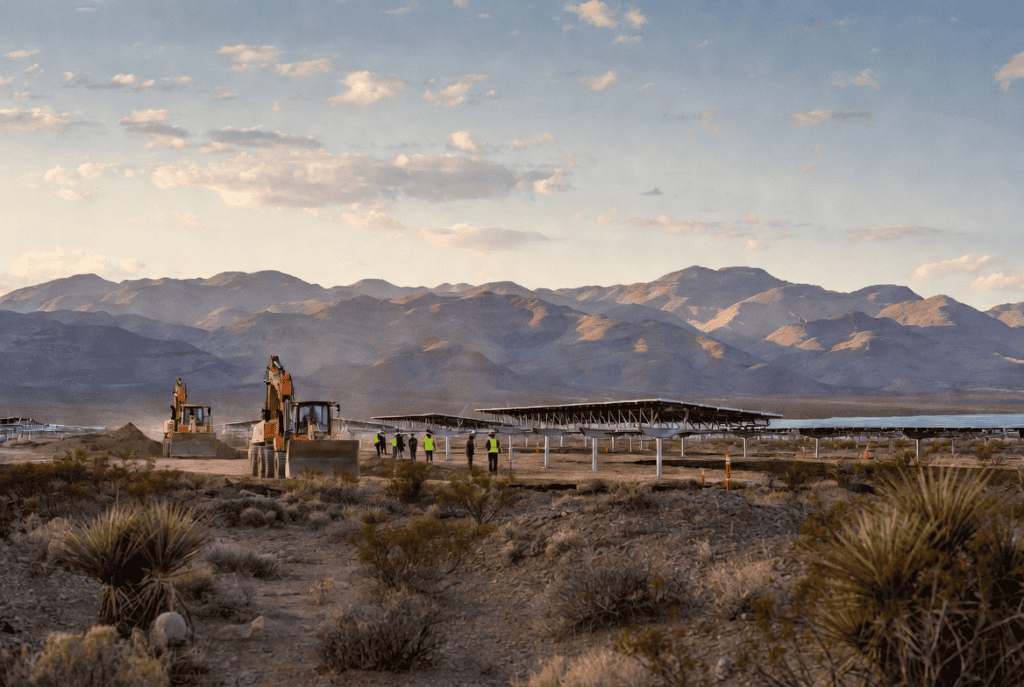
Nevada is converting its abundant sunlight and open desert into a major center for utility-scale solar generation. Before panels can be installed, extensive site preparation is required. Excavators and bulldozers perform the essential earthmoving that turns undeveloped terrain into operational solar farms. This article examines the role of these machines in constructing Nevada’s solar facilities.
Note: To keep up with fast-moving solar trends in Nevada, I use AI tools to help with research and writing. Every post is personally reviewed and edited by me.
Why Site Preparation Is Essential for Desert Solar Projects
A level expanse of Nevada desert may appear ready for solar development, yet utility-scale projects demand precise site conditions that the desert surface rarely provides. Before panel installation begins, operators must address shifting soils, drainage, and other terrain constraints. Thorough site preparation is therefore essential to the success of any Nevada solar project.
1. Grading Rocky and Uneven Terrain
Desert terrain contains irregular contours, elevation changes, and rocky outcrops. Without precise grading, panels cannot be set at the required angles, reducing generation and placing undue stress on tracking systems. Bulldozers and excavators create the level foundations needed for reliable, efficient operation.
2. Managing Variable Desert Soils
Desert soils are highly variable and commonly consist of loose sand, cemented caliche, or expansive clay that changes volume with moisture.
- The Risk (Geotechnical Instability): Unconsolidated or reactive soils induce differential foundation settlement, resulting in structural frame displacement, array misalignment, and severe mechanical stress across racking components and glass modules.
- The Fix (Subgrade Remediation & Soil Stabilization): Heavy earthmoving equipment excavates unstable subgrade material, compacts existing subsoils to required engineering density standards, and imports engineered structural fill to establish an unyielding, structurally sound foundational pad.
3. Vegetation Removal and Wildlife Protection
Although desert vegetation appears sparse, brush and cacti must be removed to reduce fire risk and provide a safe work area. Clearance must also comply with environmental regulations that protect native species, including the endangered desert tortoise.
4. Designing for Flash Flood Risk in Arid Terrain
Although annual rainfall is low, monsoon storms can produce intense runoff. Without engineered drainage, flooding may undermine foundations or damage electrical equipment. Excavators construct channels, retention basins, and berms that divert water around solar arrays.
5. Dust Control and Air Quality
Heavy equipment operating on dry desert soils generates substantial dust. In Nevada, fugitive dust is subject to regulatory limits. Site preparation therefore includes dust-control measures such as water application and soil stabilizers to protect air quality for nearby communities and wildlife.
6. Preparing Foundations for Large-Scale Arrays
Utility-scale solar arrays rely on thousands of driven steel piles. If subsurface obstructions are not removed or soils are not properly compacted to resist Nevada’s wind and seismic loads, pile installation becomes difficult and long-term stability is compromised.
For more details about heavy machinery and solar, explore our 2026 guides on cranes, solar-optimized heavy machinery, and solar fleet management practices.
The Role of Bulldozers in Desert Site Preparation
The stability of a solar farm depends on its foundation, and bulldozers perform much of the initial earthwork required to create it. In Nevada’s desert terrain, these machines grade uneven ground into level surfaces capable of supporting large-scale solar arrays. Their work establishes the conditions necessary for reliable installation and long-term performance.
1. Initial Clearing of Rocks and Vegetation
Before grading begins, the site must be cleared of vegetation and surface obstacles. In Nevada this typically includes creosote bush, yucca, and scattered boulders. Because the desert supports protected species such as the desert tortoise, clearing is conducted in coordination with biological monitors. Operators follow defined protocols so that work complies with environmental requirements and minimizes impacts to wildlife.
2. Precision Grading for Array Layouts
After clearing, the site is graded to precise elevations. Uneven surfaces prevent proper panel alignment, can interfere with tracking systems, and reduce energy output. Modern bulldozers use GPS and laser guidance to control blade position automatically, enabling operators to grade large areas to tight tolerances.
3. Cut-and-Fill Operations for Site Balance
To limit costs and reduce off-site hauling, developers balance earthwork on the site itself. Bulldozers accomplish this through cut-and-fill operations:
- The Cut (Excavation & Grade Reduction): Mechanically shaving down elevated terrain, high spots, and rocky ridges to achieve designed elevation baselines.
- The Fill (Controlled Earth Embankment & Compaction): Transporting and distributing excavated soil into low-lying depressions, gullies, and grade voids to establish a uniform surface.
Balancing earthwork on site reduces hauling costs and retains native soil within the project boundary.
Pro-Tips for Desert Dozing
- Spray Water to Keep Dust Down: Bulldozers push up a lot of dirt, so they need to work side-by-side with water trucks that spray the soil before it gets moved. This keeps the air clear and complies with local Clark County dust control laws.
- Use Wide-Track Equipment to Protect the Soil: Using machinery with wide, low-pressure tracks spreads out the heavy weight of the equipment. This prevents packing the soil down too tightly in areas where natural rainwater needs to soak into the ground.
- Work in Phases Instead of Clearing Everything at Once: Clear and level the land in small, step-by-step sections rather than scraping the entire site raw. Keeping less bare dirt exposed at any one time stops high winds from blowing dust clouds across the area.

Excavators for Foundation and Underground Work
After bulldozers complete initial grading, excavators perform more precise tasks. They excavate for structural foundations and install the underground electrical conduits required to interconnect the array. These operations convert the graded site into a functional power plant.
1. Preparing Sites for Thousands of Foundations
Utility-scale solar farms require thousands of driven steel piles to support panel racking. Desert soils often need preparation before piles can be installed effectively. Excavators support this process by:
- Clearing Hard Obstructions: Removing buried boulders or dense caliche layers that would otherwise block pile-driving equipment from reaching design depth.
- Preparing Ballast Footings: Excavating precise pad sites for heavy concrete ballast blocks in extremely rocky terrain where ground penetration isn’t feasible.
Using GPS guidance and hydraulic thumbs, operators remove rocks and excavate to specified tolerances, typically within centimeters. Deviations from design elevations or locations can prevent proper alignment of tracker rows and increase mechanical loads on the system over time.
2. Trenching for Underground Electrical Infrastructure
A solar farm produces large volumes of electricity that must be collected and delivered to the grid. Excavators dig the extensive network of underground trenches required for:
- Electrical Interconnection Cabling (DC/AC Routing): Installing heavy-gauge direct-burial and conduit-enclosed wiring to safely link photovoltaic strings to central or string inverters while minimizing resistive voltage drop and electrical loss.
- Telemetry and SCADA Communication Infrastructure: Laying high-reliability fiber-optic network backbones to stream real-time module performance, inverter status, and environmental sensor telemetry to central monitoring operations.
- Subsurface Hydrological Drainage Systems: Engineering subterranean culverts, retention basins, and trench drainage networks to safely channel intense desert flash-flood runoff and prevent severe site erosion across the facility..
Trenching in Nevada is complicated by caliche, a dense, cement-like soil layer common in the desert. Operators equip excavators with heavy-duty buckets and rock teeth to penetrate these conditions while avoiding existing underground utilities.
The Reality of Desert Excavation
Operating an excavator in Nevada presents distinct regional challenges:
| Challenge | How Crews Handle It |
| Caliche & Rock | Using extreme breakout-force hydraulics and swapping out worn-down bucket teeth frequently. |
| Desert Heat | High summer temperatures strain hydraulic systems and operators alike, requiring strict maintenance schedules and climate-controlled cabs. |
| Flash Floods | An open trench is a natural river during a flash flood. Crews have to dig temporary diversion berms to keep their work from washing away overnight. |
Best Practices for Underground Crews
- Enforce Strict Dust Control Protocols: Trenching operations generate concentrated dust plumes, requiring continuous water suppression or chemical soil stabilizers along active work corridors to maintain air quality and ensure full regulatory compliance.
- Conduct Pre-Excavation Environmental Surveys: Before ground disturbance begins, field teams execute comprehensive cultural and biological surveys to locate, mark, and protect sensitive wildlife habitats and historic cultural resources.
- Align Excavation Timelines with Environmental Windows: Heavy earthmoving and trenching schedules are strategically timed outside critical breeding and nesting seasons for local wildlife to minimize ecological impact across the site footprint.
Dust Control in Desert Conditions
Dust control is a significant operational and regulatory requirement during utility-scale solar construction in Nevada. Disturbance of dry desert soils by heavy equipment generates fine particulate matter that can be carried long distances by regional winds. Uncontrolled dust can affect nearby communities and wildlife and may result in regulatory enforcement actions that delay construction. Compliance with dust mitigation standards is therefore required to maintain project schedules.
The Modern Dust Control Toolkit
Dust control in arid climates requires both short-term suppression measures and longer-term soil stabilization.
1. Strategic Water Application
Water trucks are commonly used for dust suppression on active construction sites. In high temperatures, plain water evaporates quickly. Adding surfactants or soil palliatives reduces surface tension, improves penetration into the soil, and extends the duration of suppression.
2. Chemical Stabilizers and Crusting Agents
After grading, exposed soil surfaces are vulnerable to wind erosion. Crews apply soil stabilizers that bind the surface layer and form a temporary crust. This treatment reduces dust generation for months while subsequent construction activities, including racking installation, proceed.
3. Physical Wind Barriers
In higher-risk areas, physical barriers provide additional control. Fences, windbreaks, straw bales, and mulch are placed along perimeters to reduce wind speed and capture airborne particles before they leave the site.
Smart On-Site Habits
In addition to chemical and physical controls, operational practices can further reduce dust generation:
- Enforce Strict Haul Road Speed Controls: Restricting heavy machinery and support vehicle speeds on unpaved site access roads directly mitigates mechanical dust generation, eliminating the primary source of daily fugitive airborne particulates.
- Implement Phased Land Disturbance Sequences: Clearing and grading site acreage in distinct, manageable sub-phases—rather than stripping the entire site footprint simultaneously—limits total bare soil exposure to wind and weather elements.
- Incorporate Predictive Weather Scheduling: Aligning major mass-earthmoving operations with real-time meteorological forecasts allows project managers to suspend high-disturbance tasks during high-wind events and gust warnings.
- Execute Track-Out and Transport Containment Protocols: Utilizing automated wheel-wash stations at site egress points and securing tarps over loaded haul truck beds prevents off-site soil tracking and particulate spillage onto public roadways.
Regulatory and Site Constraints
Nevada enforces air quality standards through agencies such as the Clark County Department of Environment and Sustainability and the Nevada Division of Environmental Protection (NDEP). Utility-scale solar projects must obtain approved dust control plans before construction begins. On active sites, real-time particulate monitors along property boundaries track compliance. Elevated readings trigger notifications, requiring crews to implement additional controls.
Dust suppression requires ongoing expenditure, but the cost of noncompliance is typically higher. A stop-work order can halt construction and generate substantial expenses from idled labor and delayed project milestones.
Technology-Assisted Dust Control
Dust control methods have expanded beyond routine water application. Developers are increasingly using additional technologies to support compliance:
- Use Drones to Spot Dust Early: Drones equipped with heat and optical sensors fly over the site to spot dry patches and rising dust plumes before crews can even see them from the ground.
- Use Smart Sprinklers That Track the Weather: Automated sprinklers connect to weather sensors that track wind speeds and humidity, turning on automatically as soon as conditions get dry or windy enough to kick up dust.
- Apply Eco-Friendly Soil Sealants: Plant-based liquid sprays form a temporary protective crust over bare dirt to lock down dust without harming the soil or stopping native plants from growing back later.
Environmental Considerations for Utility-Scale Solar
Utility-scale solar projects increase renewable generation but require substantial land disturbance in desert environments. Nevada’s desert ecosystems are sensitive to soil compaction and vegetation removal, and equipment tracks and graded areas can persist for years if not properly managed. Project planning therefore includes measures to limit impacts on wildlife, cultural resources, and long-term land condition.
Construction-Phase Environmental Constraints
Before construction begins, environmental teams and project managers address the following priorities:
1. Desert Tortoise Protection Measures
Southern Nevada contains habitat for the threatened desert tortoise. The species spends much of its time in burrows and is susceptible to injury or mortality from ground-disturbing equipment. Therefore, before construction starts, biologists sweep the area to locate and safely relocate any tortoises. The entire perimeter is then locked down with specialized, tortoise-proof fencing to keep them from wandering back onto the job site.
2. Topsoil Preservation and Replacement
Grading removes native vegetation such as creosote and yucca and disturbs the upper soil layer, which contains seeds and organic material. Operators can first remove and stockpile the topsoil. After construction, the stockpiled material is replaced to support vegetation recovery.
3. Wildlife Movement Corridors
Desert landscapes support movement by species such as bighorn sheep, kit foxes, and migratory birds. Continuous fencing across large project areas can impede these movements. Some utility-scale designs incorporate open corridors within the site to maintain connectivity for wildlife.
4. Cultural and Archaeological Resource Protection
Nevada desert areas contain Native American cultural resources, including petroglyphs, artifacts, and sites of traditional significance. Developers complete cultural resource surveys before construction. Identified sites may be avoided through design changes or documented and recovered under archaeological protocols.
Construction Mitigation Measures
Utility-scale sites apply the following controls during construction to limit long-term surface disturbance:
- Deploy On-Site Biological Monitors: Environmental specialists inspect active construction zones and open trenches prior to equipment operation, relocating trapped wildlife and enforcing strict compliance with designated environmental boundaries.
- Implement Wildlife-Conscious Infrastructure Design: Engineering adjustments—such as elevated module clearance heights to facilitate small mammal movement and low-impact, dark-sky-compliant exterior lighting—mitigate long-term operational impacts on local nocturnal fauna.
- Execute Precision Erosion and Hydrological Controls: Specialized site grading and runoff containment measures prevent heavy monsoon rainfall from washing uncompacted construction sediment into natural dry washes, preserving regional watersheds and downstream drainage basins.
Regulatory Compliance Requirements
Solar projects in Nevada undergo review by federal and local agencies, including the Bureau of Land Management (BLM), Clark County, and the U.S. Fish and Wildlife Service. Larger projects on public land typically require an Environmental Impact Statement (EIS). The EIS process evaluates site-specific impacts and can extend over multiple years.
Evolving Construction Practices for Utility-Scale Solar
Equipment used on Nevada utility-scale solar projects has changed substantially over the past decade. Current and emerging practices combine conventional earthmoving equipment with software, machine guidance, and alternative powertrains. These approaches aim to reduce grading volume, improve placement accuracy, and lower on-site emissions.
1. Machine Control and Placement Accuracy
Earthmoving equipment on utility-scale sites increasingly uses GPS and RTK positioning rather than grade stakes alone. These systems provide continuous location data that operators use to control blade or bucket elevation during grading.
2. Aerial Survey and Site Monitoring
Unmanned aerial systems equipped with LiDAR and thermal sensors are routinely used during site preparation. Flights support progress documentation, generation of 3D topographic models, and verification of grading quantities. Project teams use the resulting data to identify elevation deviations and areas requiring dust control.
3. Low-Disturbance Earthmoving and Soil Stabilization
Equipment manufacturers now offer hybrid and battery-electric excavators and dozers for utility-scale sites. These machines reduce on-site fuel consumption and local emissions during grading. Dust control practices are also shifting toward chemical stabilizers that bind surface soils for extended periods with substantially lower water volumes than traditional watering.
Emerging Site Preparation Technologies
Upcoming utility-scale projects are incorporating digital planning tools alongside revised foundation and structural approaches:
- Integrate AI-Optimized Earthwork Workflows: Advanced algorithmic modeling simulates earthmoving sequences prior to site mobilization, calculating optimized machine haul routes to minimize equipment fuel burn, mechanical wear, and surface dust generation.
- Deploy Low-Impact Substructure Foundations: Modern ground-screw pile configurations and prefabricated concrete ballast arrays facilitate direct surface installation with minimal mass grading, preserving native desert soil profiles and natural topography.
- Incorporate Automated Machine-Vision Wildlife Detection: Smart camera systems with edge AI process real-time imagery ahead of active machinery blades, automatically alerting operators if sensitive species like the desert tortoise enter work corridors.
Thank you for reading! If you have any feedback or a specific Nevada solar topic you’d like us to cover next, please reach out directly at admin@nevadasolarguide.com.


