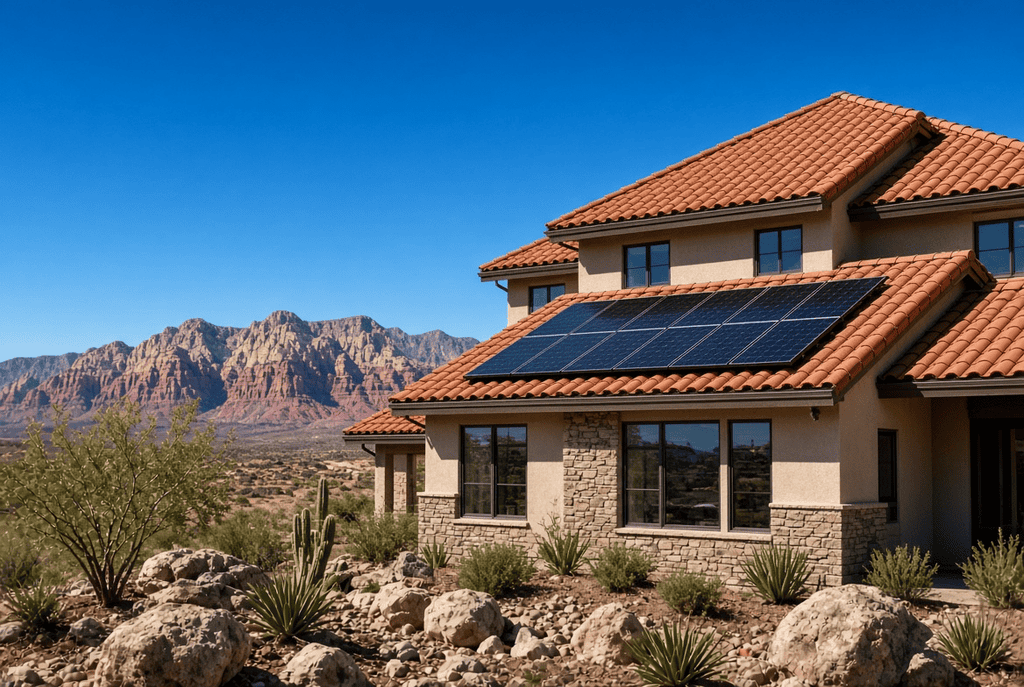
Homeowners seeking to reduce summer NV Energy bills should confirm an installer’s qualifications before signing a contract. Poor workmanship can result in roof leaks, permitting delays, and other costly problems. The following checklist provides 20 questions designed for Las Vegas and North Las Vegas homeowners. These questions help verify that a company understands Clark County building codes and can complete a safe, compliant interconnection to the grid.
Note: To keep up with fast-moving solar trends in Nevada, I use AI tools to help with research and writing. Every post is personally reviewed and edited by me.
Section 1: Vetting the Company (Separating the Pros from the Smooth Talkers)
Before reviewing system proposals, confirm that the company is properly licensed and established in Nevada. The first five questions help identify operators that lack local credentials or rely primarily on high-pressure sales tactics.
1. “Can I see your Nevada contractor’s license and insurance?”
What to look for: You want their Nevada State Contractors Board (NSCB) license number and proof of active general liability and workers’ comp insurance.
- Why it matters: If they aren’t licensed by the state, they can’t legally pull building permits in Clark County. Period. Hiring an unlicensed crew means you’re entirely unprotected if they damage your roof or walk away with your deposit.
2. “How many homes have you switched to solar in Clark County over the last two years?”
What to look for: A proven track record of dozens (or hundreds) of local installs, not just jobs in Arizona or California.
- Why it matters: Vegas solar comes with its own unique hurdles—from navigating NV Energy’s tricky interconnection process to handling high desert wind loads and delicate tile roofs. You don’t want a crew using your home as a learning experience.
3. “Can you give me 3 to 5 local references from the last six months?”
What to look for: Real homeowners in Las Vegas or North Las Vegas, ideally with a roof type similar to yours.
- Why it matters: Anyone can buy fake online reviews, but a five-minute phone call with a real neighbor will tell you everything you need to know about a company’s communication, punctuality, and cleanup.
4. “Are you officially certified by the manufacturers of the equipment you’re selling me?”
What to look for: Proof that they are certified installers for brands like Tesla, Enphase, SolarEdge, or Qcells.
- Why it matters: This is a big one. Many major manufacturers will straight-up void your 25-year warranty if their equipment is installed by an uncertified contractor. Make sure their tech crew has done the factory homework.
5. “Have you ever had a complaint filed against you with the Nevada State Contractors Board?”
What to look for: A direct, honest answer.
- Why it matters: You can (and should) double-check this yourself, but asking upfront is a great way to gauge their honesty. A pattern of complaints is an immediate red flag for poor craftsmanship or terrible customer service.
💡 Pro Tip: Don’t just take their word for it. Grab a pen, write down their license number, and run a quick search on the NSCB website before you sign anything.
For more details about saving money when buying solar, explore our 2026 guides on the Nevada State Contractors Board (NSCB) registry, whether a solar lease or PPA is worth it in Nevada, and secured vs. unsecured solar loans in Nevada.
Section 2: Technical Design (Making Sure Your System Can Stand the Vegas Heat)
System designs vary significantly in their ability to perform under Southern Nevada’s high temperatures and intense solar exposure. The next five questions help confirm that a proposal is appropriately engineered for the specific roof, budget, and local climate conditions.
6. “How exactly did you calculate the size of this system and its expected output?”
What to look for: A detailed, data-driven proposal. They should be using local sunlight data, a precise 3D shading analysis of your actual roof, and realistic temperature adjustments.
- Why it matters: Generic estimates are dangerous here. A salesperson using a standard “one-size-fits-all” formula will almost always overpromise how much power your panels will make during a blazing 115°F July afternoon.
7. “What is the exact temperature coefficient of these panels?”
What to look for: You want to hear a number between -0.29%/°C and -0.35%/°C (or even lower/better).
- Why it matters: Solar panels hate extreme heat. As they get hotter, they lose efficiency. When rooftop temperatures clear 130°F in Vegas, a panel with a poor temperature coefficient will see its power production plummet right when you need your A/C the most.
8. “Are you quoting me microinverters, power optimizers, or a central string inverter?”
What to look for: A clear explanation of why they chose that specific inverter tech for your roof layout and shading situation.
- Why it matters: Many modern homes in Las Vegas and North Las Vegas have complex, multi-angled tile roofs. Microinverters or optimizers ensure that if one panel gets shaded by a chimney or a neighbor’s tree, the rest of your system keeps cranking out power at 100%.
9. “What is the total, all-in cost before and after incentives?”
What to look for: A transparent line-item breakdown showing equipment, labor, permitting, and the Nevada’s sales tax exemption.
- Why it matters: You need the true out-of-pocket, bottom-line number. Don’t let a slick presentation hide the actual cost behind confusing monthly payment projections or assumed future utility rate hikes.
10. “Do you offer a written annual production guarantee, and what happens if the system misses the mark?”
What to look for: A formal contract clause guaranteeing a specific number of kilowatt-hours (kWh) per year, with a clear remedy (like cutting you a check) if it underperforms.
- Why it matters: Verbal promises won’t pay your NV Energy bill. Reputable installers confidently stand behind their engineering models in writing; if they hesitate to guarantee their numbers, run.
💡 Pro Tip: Ask the installer to open up their phone and show you a live, anonymized look at a current local customer’s monitoring app. Seeing real-time production data from a nearby neighborhood is the best proof that their systems deliver.

Section 3: The Bureaucracy (NV Energy, Permits & Clark County Rules)
This section addresses the stage at which many Southern Nevada projects encounter delays. Successful completion depends on familiarity with local utility interconnection requirements and Clark County inspection procedures. The following five questions help determine whether an installer possesses the necessary local experience.
11. “Are you handling the NV Energy interconnection paperwork, and what is your current realistic timeline?”
What to look for: They should explicitly say they handle the entire process from start to finish. They should also give you an honest update on current utility wait times.
- Why it matters: Your panels can’t legally turn on until NV Energy grants “Permission to Operate” (PTO). Because utility backlogs fluctuate constantly, you need an installer who is actively moving applications through the pipeline every single week, not someone guessing at the timeline.
12. “Has a structural engineer reviewed my roof and given it a stamped approval?”
What to look for: Assurance that a certified Nevada structural engineer will review your home’s layout—especially if you have a tile roof, an older home, or a massive layout.
- Why it matters: Clark County inspectors don’t play around. They frequently require official, stamped engineering drawings to prove your roof can handle the combined weight of the racks, panels, and intense desert wind loads. If an installer skips this step, your project will stall out at the county permit desk.
13. “Will your company pull all the necessary Clark County building and electrical permits?”
What to look for: A definitive “yes.” It should be fully included in your contract.
- Why it matters: Red flag alert: If an installer ever asks you to pull the permits as an “owner-builder,” run away. That’s a classic sign of an unlicensed or unbonded operation. Doing this wrong can delay your project for months, complicate your home insurance, and cause massive headaches when you eventually try to sell your house.
14. “What happens if NV Energy or the county inspector says my main electrical panel needs an upgrade?”
What to look for: A clear policy on who covers the bill if your existing electrical panel or meter socket isn’t up to modern solar standards.
- Why it matters: Discovering you need a main panel upgrade mid-project can slap an unexpected $1,500 to $4,000+ onto your bill. You need to know upfront whether that risk is baked into their contract or if it’s going to hit you as a surprise change order.
15. “How does this system design account for NV Energy’s current demand charges?”
What to look for: A smart, strategic explanation of how they are sizing your system (and potentially configuring smart software or battery storage) to match NV Energy’s latest rate structures.
- Why it matters: The days of simple 1-to-1 net metering are long gone. To wipe out your power bill, your system needs to be meticulously designed around current Time-of-Use (TOU) windows and demand peaks. A properly optimized design can easily save you an extra $1,000+ every single year compared to a generic layout.
💡 Pro Tip: A reputable local installer won’t hedge or give vague answers here. They should be able to break down the exact step-by-step dance between Clark County inspectors and NV Energy techs, giving you realistic timelines based on current local backlogs.
Section 4: The Fine Print (Warranties, Timelines, and Life After the Sale)
Before signing a contract, confirm the protections that will remain in place after installation is complete. The final five questions address warranties, service commitments, and the support available once the installation crew has left the site.
16. “What exactly does your workmanship warranty cover, and how long does it last?”
What to look for: A clear distinction between the hardware warranty and the labor warranty. You want to know exactly who pays for the service call if a roof leak pops up or an inverter stops reporting.
- Why it matters: Don’t get fooled by a salesperson shouting “25-year warranty!” That usually only applies to the physical panels. Workmanship warranties—the part that covers the installer’s actual labor, roof penetrations, and wiring—are typically much shorter (often 5 to 10 years). Get those labor terms in writing.
17. “What is a realistic, step-by-step timeline from today until the day I turn the system on?”
What to look for: A transparent schedule that accounts for engineering, Clark County permit backlogs, the actual build, and waiting on NV Energy’s final blessing.
- Why it matters: Modern solar projects in the valley can easily take anywhere from 10 to 20 weeks from start to finish. Knowing this upfront resets your expectations so you aren’t pulling your hair out wondering why your panels are sitting idle on your roof for a month while waiting on utility paperwork.
18. “What happens if the project gets stuck in permitting or utility delays?”
What to look for: Clear protections built into the contract. Ask if they offer compensation if they blow past deadlines, who absorbs extra costs if the county demands changes, and at what point you can cancel for a full refund if things stall out indefinitely.
- Why it matters: A solid contract protects you from getting ghosted mid-project. Great local companies aren’t afraid to back their timelines with performance clauses (like a small daily credit if they drag their feet past a reasonable grace period). If the contract lets them delay your project forever with zero consequences, that’s a massive red flag.
19. “Do you provide ongoing support, maintenance, and monitoring after the system is live?”
What to look for: A dedicated service department, clear response times for troubleshooting, and optional maintenance plans.
- Why it matters: Vegas roofs deal with two major performance killers: relentless desert dust and pigeons looking for a shady place to nest. You need to know if the company will help you monitor system drops, offer bird-guard installation, or if you’re entirely on your own for cleaning and upkeep.
20. “Can I take this contract home and review it for at least three business days before signing?”
What to look for: An immediate, zero-pressure “absolutely.”
- Why it matters: High-pressure “sign today or the deal is gone” tactics are the oldest trick in the book. This is a major financial commitment. Take the paperwork, read it on your own couch, and make sure the verbal promises made at your kitchen table match the legal text on the page.
💡 Pro Tip: Don’t skim the fine print. Sit down with the installer and ask them to explain the payment milestones and warranty exclusions line by line. If a clause feels vague or unfair, demand that they update the text before you sign.

The Finish Line: How to Put This Checklist to Work
These 20 questions provide a structured basis for evaluating solar proposals. Using them consistently during consultations helps identify installers with the appropriate licensing, local experience, and contractual protections. The following steps outline a practical approach to the consultation process.
Your Step-by-Step Game Plan
- Keep this list handy: Print it out or save it to your phone. Don’t be shy about pulling it out right in front of the sales rep. It immediately signals that you’ve done your homework and won’t be fooled by a slick pitch.
- Get at least 3 quotes: Never sign with the first company that knocks on your door or sits at your kitchen table. Interviewing at least three installers lets you compare their technical knowledge, equipment quality, and attitude side-by-side.
- Take notes and watch for red flags: Write down their answers. If a rep gets defensive, gives vague answers about their workmanship warranty, or tries to brush off Clark County permitting rules, consider that your cue to show them the door.
- Trust, but verify: Don’t just take their word for it. Spend ten minutes double-checking their license number on the Nevada State Contractors Board website, call their references, and look up their track record.
- If it’s not in writing, it doesn’t exist: If a rep promises you a specific timeline, a killer production guarantee, or a promise to cover main panel upgrades, make sure that exact language is written into the final contract. Verbal promises won’t protect your wallet.
- Sleep on it: Give yourself at least three to five business days to read the contract on your own time. A legitimate local company will never pressure you to sign on the spot.
Qualified installers in Las Vegas and North Las Vegas are generally prepared to address these questions in detail. Established companies can readily discuss their engineering practices, certifications, and local project history. Installers unable or unwilling to provide clear answers may warrant further scrutiny. When properly designed and installed, a solar system can offer meaningful long-term financial benefits under current Nevada conditions, provided the contractor is appropriately qualified.
Thank you for reading! If you have any feedback or a specific Nevada solar topic you’d like us to cover next, please reach out directly at admin@nevadasolarguide.com.