Zach Smith

A Solar United representative describing how Clark County's Switch Together solar program works to a group of interested Nevadans.

Group-Buy Solar Programs in Nevada: How Clark County’s Switch Together Works

Group-buy programs aggregate local demand to obtain pricing and process support from participating installers. Clark County partners with Switch Together and Solar United Neighbors under the All-In Clark County initiative which is a program that covers rooftop solar, battery storage, and EV chargers for homeowners and small businesses. This guide covers program structure, pricing, and

Group-Buy Solar Programs in Nevada: How Clark County’s Switch Together Works Read More »

A Nevadan family reviewing their personalized Expanded Solar Access Program plan.

Understanding Nevada’s Expanded Solar Access Program (ESAP)

Rooftop solar is not feasible for many Nevada customers as renters cannot install equipment on property they do not own and low-income households may face credit, capital, or ownership constraints. Homeowners may be limited by shading, roof condition, or homeowners’ association rules. The Expanded Solar Access Program (ESAP) provides a lower program energy rate for

Understanding Nevada’s Expanded Solar Access Program (ESAP) Read More »

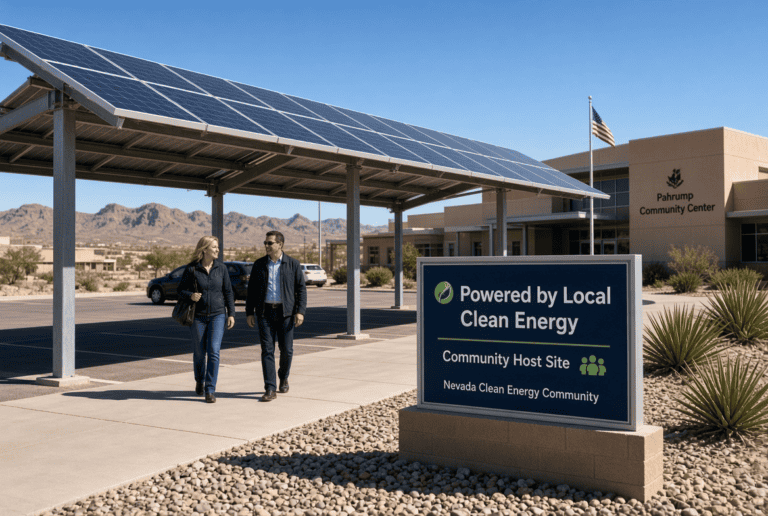
Pahrump Community Center participating in the Community Based Solar Resources (CBSR) Program in Nevada.

Community Based Solar Resources (CBSR) Program in Nevada

Rooftop solar is not practical for every household. Renters, homes with limited roof space or shading, and households that prefer to avoid the upfront cost of an owned system have limited options under standard interconnection rules. NV Energy’s Community Based Solar Resources (CBSR) program addresses part of that gap by developing smaller solar installations on

Community Based Solar Resources (CBSR) Program in Nevada Read More »

A Nevada solar salesman explaining current buyback rates for solar work to a customer that just bought solar for their North Las Vegas home.

Selling Solar Excess Power in Nevada: Current Buyback Rates & Community Solar Options 2026

A common question from Nevada homeowners is what happens to excess electricity generated by a solar system. When production exceeds on-site use, the surplus is credited rather than lost. This section explains how excess power is valued under Nevada’s net metering rules, how bill credits are applied, and what options exist for homeowners who cannot

Selling Solar Excess Power in Nevada: Current Buyback Rates & Community Solar Options 2026 Read More »

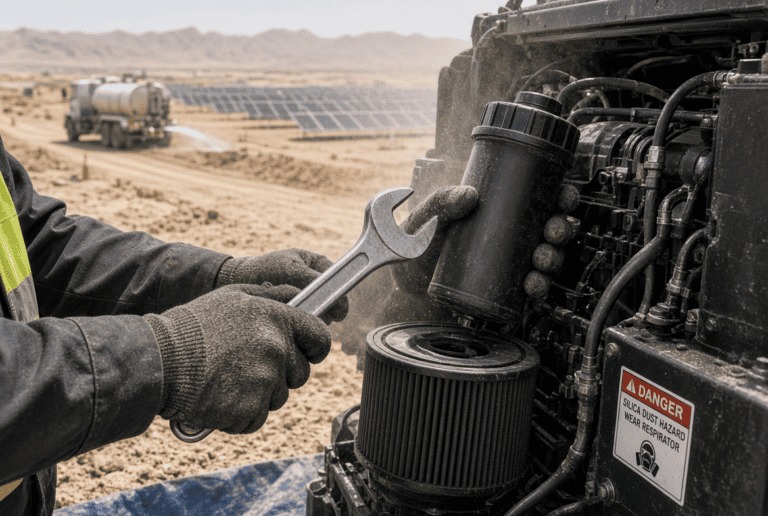
Heavy machinery being serviced on a Nevada solar farm construction site with dust control measures visible as an important part of solar fleet management practices.

Keeping Heavy Gear Running in the Nevada Heat: Solar Fleet Management Practices

Utility-scale solar construction in the Nevada desert exposes equipment to high ambient temperatures, abrasive dust, and abrasive or rocky soils. Excavators, dozers, graders, and pile drivers require maintenance practices that account for these conditions and standard service intervals alone are often insufficient. This section outlines equipment management practices that address dust exposure and operating costs

Keeping Heavy Gear Running in the Nevada Heat: Solar Fleet Management Practices Read More »

An example of solar-optimized heavy machinery utilized in Nevada.

Innovations in Solar-Optimized Heavy Machinery: From Electric Excavators to Autonomous Trackers

Utility-scale solar construction in Nevada has traditionally relied on diesel-powered excavators, bulldozers, and cranes. Electric excavators, GPS-guided grading systems, and automated tracker installation equipment are now in use on some projects. These systems can improve grading accuracy, reduce on-site emissions, and support more consistent installation rates in desert conditions. This section reviews the primary equipment

Innovations in Solar-Optimized Heavy Machinery: From Electric Excavators to Autonomous Trackers Read More »

A crane utilizing proper rigging techniques to install a solar panel for a Nevada Solar Farm.

Cranes and Heavy Lifting: Safely Installing Solar Panels on Commercial and Utility Projects in Nevada

Installing solar arrays on Nevada commercial rooftops and utility-scale sites requires precise crane operations and rigging as desert wind conditions, equipment weight, and tight schedules leave little margin for error. This guide covers the crane types commonly used, applicable safety requirements, and practical considerations drawn from recent projects in the state. Note: To keep up

Cranes and Heavy Lifting: Safely Installing Solar Panels on Commercial and Utility Projects in Nevada Read More »

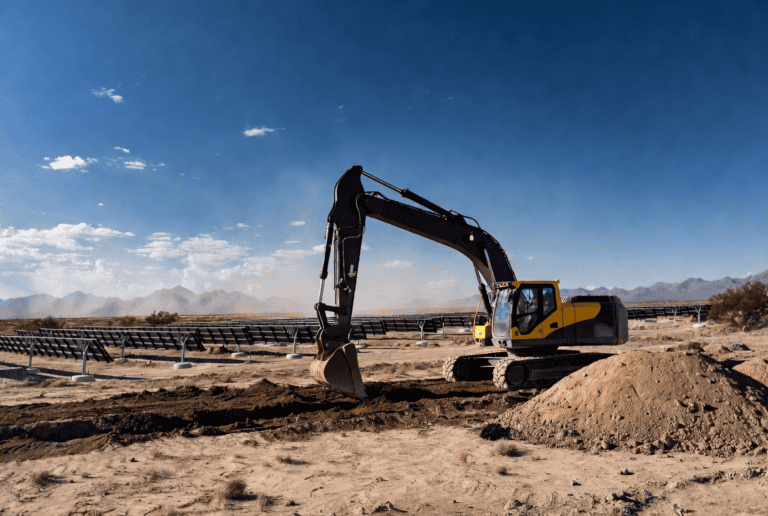
An image showing how excavators and bulldozers build Nevada's Solar Farms.

The Heavy Lifters: How Excavators and Bulldozers Build Nevada’s Solar Farms

Nevada is converting its abundant sunlight and open desert into a major center for utility-scale solar generation. Before panels can be installed, extensive site preparation is required. Excavators and bulldozers perform the essential earthmoving that turns undeveloped terrain into operational solar farms. This article examines the role of these machines in constructing Nevada’s solar facilities.

The Heavy Lifters: How Excavators and Bulldozers Build Nevada’s Solar Farms Read More »

An exaggerated image of dirty solar panels after a monsoon. Hightlights why monsoon rains won't clean your solar panels.

Why Monsoon Rains Won’t Clean Your Solar Panels (And What to Do Instead)

Each summer, many homeowners in Las Vegas and North Las Vegas expect monsoon rains to clean their solar panels. In practice, these storms usually leave a thick layer of dried mud and clay that reduces output for weeks or months. This guide explains why monsoon rainfall is ineffective at cleaning panels and outlines the maintenance

Why Monsoon Rains Won’t Clean Your Solar Panels (And What to Do Instead) Read More »

A symbolic split image representing a secured home equity loan vs unsecured solar loan options with Nevada home and solar panels.

Secured vs. Unsecured Solar Loans in Nevada: Should You Use Your Home Equity or an Installer’s Line of Credit?

Homeowners installing solar in Las Vegas or North Las Vegas must select a financing method. The primary options are a secured loan, such as a home-equity loan or HELOC, and an unsecured installer loan. The choice affects total cost over the system’s life. The following sections describe both structures under Nevada conditions, compare their terms,

Secured vs. Unsecured Solar Loans in Nevada: Should You Use Your Home Equity or an Installer’s Line of Credit? Read More »