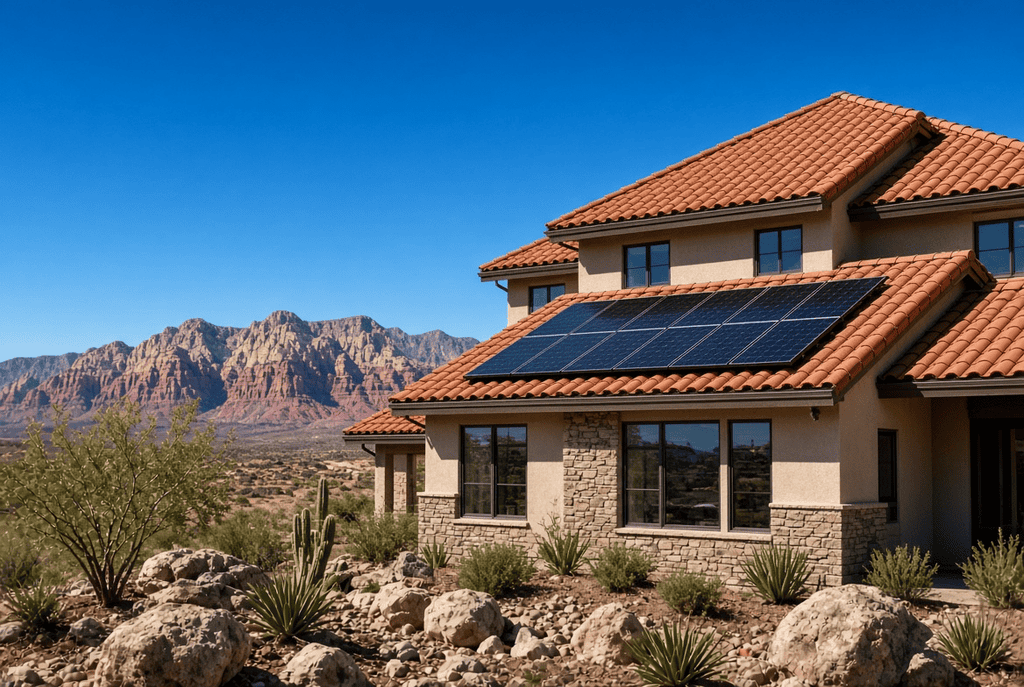
When you’re going solar in Vegas, the panels get most of the attention, but the racking that holds them in place is just as important. Between the summer heat, desert wind gusts, and heavy tile roofs, the mounting system has a real job to do—and local building codes are strict. Choosing the right setup isn’t only about safety; it’s about protecting the system for the next 25+ years. This guide covers the best solar panel mounting systems for the Las Vegas Valley. Whether you have a classic Spanish tile roof (common in North Las Vegas) or a modern flat roof, you’ll find local recommendations, realistic costs, and current 2026 performance notes.
Note: To keep up with fast-moving solar trends in Nevada, I use AI tools to help with research and writing. Every post is personally reviewed and edited by me.
Why Your Solar Foundation Matters in Vegas
Think of your solar mounting system as the foundation of the array. In Las Vegas and North Las Vegas, it’s one of the most important parts of the whole setup as the desert climate is hard on outdoor equipment. Cutting corners on racking might save a little money upfront, but the wrong choice can reduce energy production, void warranties, cause roof leaks, or let panels shift when the weather turns rough. Here’s what your system is up against out here:
1. High Desert Winds
Between summer monsoons and valley windstorms, Clark County requires solar systems to withstand gusts of 90 to 110 mph. If the mounting system isn’t engineered properly, those winds can act like sails and lift or shift the panels. A code-compliant racking setup keeps the array secure for the next 25+ years.
2. Intense Temperature Swings
When summer days hit 115°F and nights drop into the 70s, materials expand and contract constantly. This thermal cycling stresses cheaper hardware, which can loosen bolts or create micro-cracks in the panels. Quality systems from brands like IronRidge use materials built to handle those extreme desert temperature swings without shifting.
3. Heavy Spanish Tile Roofs
If you live in North Las Vegas, you probably have a concrete tile roof. These roofs look good, but they need specialized tile hooks and flashing to stay waterproof. If an installer uses generic mounts or cuts corners, they risk cracking the tiles and causing roof leaks later.
4. Brushing Off UV Rays & Dust Storms
Intense Nevada sun and frequent dust storms will degrade cheap components quickly. Premium racking systems use anodized aluminum and stainless steel hardware—brands like IronRidge, Unirac, and SnapNrack are common choices—because they resist rust, corrosion, and UV damage.
5. Passing Inspections & Getting Credits
Local building codes and NV Energy have strict requirements. A properly engineered mounting system helps the project pass city inspections and stay on schedule. Note that the 30% federal tax credit no longer applies to owner-occupied systems completed in 2026, so local incentives and long-term performance matter more than the expired federal credit.
6. Protecting Your ROI
Panels lose efficiency when they get too hot. A well-designed mounting system holds them at the right angle and leaves room for airflow underneath, which keeps them cooler and producing closer to their rated output. Poor mounting can easily cut energy production by 5% to 15% and stretch out the payback period.
The Real Local Impact
Local solar technicians report that 20% to 30% of service calls in the first five years stem from mounting problems—loose rails, cheap flashing, or wind damage. Homeowners who install professional-grade racking rarely need those repairs. In Las Vegas, saving a few hundred dollars on racking can easily turn into thousands in roof repairs and lost production. A heavy-duty, desert-tested mounting system is one of the better ways to protect your roof and your investment.
For more details about solar panels, explore our 2026 complete solar panel cost guide, and the best solar panels for Las Vegas roofs.
Top Solar Mounting Systems for Tile Roofs in Vegas (2026 Guide)
Most homes in Las Vegas and North Las Vegas have concrete Spanish tile or flat barrel tile roofs. These roofs are heavy and brittle, so they need specialized mounting systems. An installer can’t drill anywhere. The system has to slide under the tiles, attach directly to the roof structure, and stay waterproof without cracking the surrounding tiles. Here are the tile mounting systems that have performed well under local desert conditions:
1. IronRidge XR100 / XR1000 with Adjustable Tile Hooks (Best Overall)
There’s a reason you see this setup on so many roofs across North Las Vegas. IronRidge is a heavy-duty workhorse in the solar industry, built to handle extreme environmental loads.
- Why It’s Good for Vegas: Its signature curved aluminum rail profile delivers an exceptional strength-to-weight ratio designed specifically to withstand Clark County’s strict 90–110 mph wind load engineering standards, keeping arrays securely anchored during high-velocity summer monsoon gusts.
- Tile Compatibility: It integrates seamlessly with heavy-duty, adjustable stainless steel tile hooks engineered to slide underneath Spanish S-tile, W-tile, or flat concrete roof tiles without cracking delicate clay or concrete assemblies.
- Thermal Management: Exceptional built-in thermal expansion controls prevent structural fatigue. As ambient rooftop temperatures soar past 115°F during peak summer heat, the mounting hardware expands and contracts along internal stress points without transferring torsional strain to the solar panel frames or glass.
- Local Installer Consensus: IronRidge remains the industry-benchmark racking system favored by Southern Nevada installation crews due to its structural dependability, streamlined installation mechanics, and comprehensive 25-year manufacturer warranty.
2. SnapNrack Ultra Rail (With Tile Hook Attachments)
If you want a sleek, low-profile look that sits close to the roofline, SnapNrack is a strong option. The company is known for its TopSpeed rail-less systems on asphalt shingles, but its Ultra Rail system with snap-in tile hooks is a better fit for tile roofs.
- Why It’s Good for Vegas: It features a hollow “open rail channel” design that allows installers to route and conceal PV wiring directly within the rail extrusion, shielding conductors from premature degradation caused by severe desert UV exposure and localized pest damage.
- The Vibe: It utilizes universal side and mid-clamps that attach internally beneath the module frames, maintaining a flush, low-profile perimeter and a clean, streamlined architectural aesthetic.
- The Catch: Due to its lighter rail profile, installation teams must adhere to precise span and attachment spacing to satisfy Clark County engineering and wind uplift codes, making it slightly less adaptable for complex, multi-pitched, or highly segmented roof structures.
3. Unirac SolarMount (R2 Series) with Tile Attachments
Unirac is one of the longer-standing names in solar racking, and its SolarMount series is valued for durability and adaptability.
- Why It’s Good for Vegas: Older residential roofs across North Las Vegas and classic Valley neighborhoods often exhibit minor structural settling and uneven roof planes over time. Unirac’s tile attachment mechanics deliver extensive multi-axis vertical and lateral adjustability, enabling installation crews to level and align the solar array precisely across uneven concrete tile surfaces.
- The Vibe: A bulletproof, industrial-grade railed racking platform backed by a standard 25-year structural warranty, engineered to support large-scale residential PV layouts and multi-pitch roof arrays with heavy wind and thermal loads.
What to Keep in Mind for a Vegas Tile Install
If you’re looking over solar quotes for a tile roof, keep these local realities in mind:
- The “Sub-Flashing” Rule: Concrete and clay tiles act primarily as a water-shedding shield rather than a waterproof membrane. To prevent long-term moisture intrusion, qualified installers go beyond basic surface caulk or single-point tile hooks by installing a secondary metal sub-flashing plate directly over the deck underlayment at every rafter penetration. This forms a redundant, multi-layered waterproof barrier designed to withstand driving rains during severe desert monsoon downpours.
- Truss Loading: Concrete tile assemblies already impose significant dead load on a roof structure. To pass Clark County plan reviews and field inspections, a licensed structural engineer must evaluate the racking layout and confirm that dead weight—along with ASCE 7 wind uplift forces—is safely transferred across internal roof trusses without exceeding building envelope capacities.
- Cost Impact: Premium mounting hardware, specialized tile-replacement hooks, and tile-handling labor typically add $0.35 to $0.65 per watt to the base installation cost. Multi-pitch roofs, tight hips, or complex valley transitions will push pricing toward the upper end of that scale.
Top Solar Mounting Systems for Flat Roofs in Vegas (2026 Guide)
While Spanish tile is common in the North Las Vegas suburbs, the valley also has thousands of flat-roof properties—commercial buildings, modern custom homes, and townhouses. Flat and low-slope roofs need a different approach. Instead of drilling multiple holes that can compromise the waterproof membrane, most installations use ballasted systems. These rely on weighted blocks and aerodynamic designs to hold the array in place with gravity rather than roof penetrations. Here are the flat-roof mounting systems that hold up well under Las Vegas desert conditions:
1. IronRidge BX Ballasted System (Best Overall)
The IronRidge BX system is widely regarded as a strong option for residential and light commercial flat roofs. Instead of heavy steel rails, it uses modular, glass-reinforced composite chassis pods that sit directly on the roof.
- Why It’s Good for Vegas: The chassis is molded from glass-reinforced, UV-stabilized BASF Ultramid polyamide designed to endure harsh desert exposure. It maintains high mechanical strength and rigidity without thermal degradation under severe UV indexes, while built-in 360-degree drainage channels prevent water pooling and ballast weathering during intense flash floods and monsoon downpours.
- The Weight Setup: Standard concrete ballast blocks drop directly into each chassis compartment to secure the non-penetrating array, meeting Clark County’s strict ASCE 7 wind uplift requirements (90–110+ mph) without puncturing flat roof membranes.
- Performance Edge: Available in 5-degree and 10-degree tilt profiles. The 10-degree configuration provides over 5 inches of roof clearance—promoting natural dust shedding during high-wind events while optimizing airflow underneath the modules to mitigate high-temperature voltage losses.
- Warranty: Supported by IronRidge’s 25-year structural product warranty, guaranteeing long-term mechanical and material integrity.
2. Unirac RM5 / RM10 EVO Series
Unirac’s RoofMount (RM) series is a durable steel ballast option that many local commercial and larger residential installers prefer.
- Why It’s Good for Vegas: Unirac uses G90 galvanized steel and specialized structural aluminum components that provide superior corrosion protection compared to standard un-coated racking. This is critical for low-slope and flat roofs in the Las Vegas Valley, where fine desert dust and trapped moisture can form an alkaline slurry that accelerates hardware pitting over time.
- The Design: The RM5 (5-degree tilt) and RM10 EVO (10-degree tilt) platforms utilize compact, nesting ballast bays and a single-tool assembly process that minimizes installation time. Integrated aerodynamic wind deflectors disrupt low-pressure uplift, significantly lowering overall dead-load concrete ballast weight requirements on your roof framing.
- The Hybrid Option: For properties in exposed wind zones or along high-velocity mountain corridors, Unirac systems seamlessly pair with FlashLoc RM attachments. This allows installers to deploy a hybrid installation strategy—primarily ballasted, with strategic, fully flashed mechanical anchors to meet Clark County engineering standards without compromising roof integrity.
3. EcoFasten / Esdec Flat Roof Mounts
If you’re working with an older property or a roof that has strict weight limits, a heavy concrete ballasted system may not be practical. That’s where lighter engineered systems come in.
- Why It’s Good for Vegas: Ultra-lightweight click-and-fit ballast systems—such as Esdec’s FlatFix or EcoFasten’s low-slope mounting solutions—utilize high-strength composite or aluminum components that dramatically decrease structural dead load. By minimizing static weight on the roof deck, these systems help preserve the framing integrity of older home trusses across Las Vegas while speeding up rooftop assembly times.
- The Catch: Because these systems minimize concrete ballast weight, they rely on supplementary mechanical anchors to meet Clark County’s ASCE 7 wind uplift requirements. To maintain absolute water tightness, installers must deploy specialized chemical sealants paired with mechanical roof flashing attachments, ensuring complete protection against roof leaks during desert rainstorms and sudden downpours.
Key Realities for Vegas Flat Roof Solar
Before signing off on a flat-roof solar project, consider these structural and environmental factors:
- The Soiling & Dust Factor: Low-slope flat-roof arrays (typically 5° to 10° tilt to minimize wind shear) lack the steep angle necessary for rain to naturally wash away desert particulate. Fine caliche dust, construction debris, and windblown sand accumulate quickly, leading to soiling losses of 10% to 20% or more if left unaddressed. Budgeting for bi-annual professional or manual washings is essential to prevent significant performance degradation.
- Thermal Dissipation Gaps: Dark mineral-cap membranes and torch-down commercial roofs on flat residential structures act as thermal sinks, driving ambient microclimates under the modules past 140°F in mid-summer. Selecting a racking system like the IronRidge BX that maintains at least a 5-inch clearance gap above the roof deck maximizes convective airflow, lowering cell temperatures and mitigating high-heat voltage losses.
- Cost & Engineering Premium: Flat-roof mounting hardware, ballast block logistics, and specialized membrane penetrations typically add $0.40 to $0.75 per watt to base system pricing. This cost premium stems directly from mandatory structural engineering reviews required to calculate precise dead-load distributions and ASCE 7 wind uplift thresholds for Clark County plan approvals.
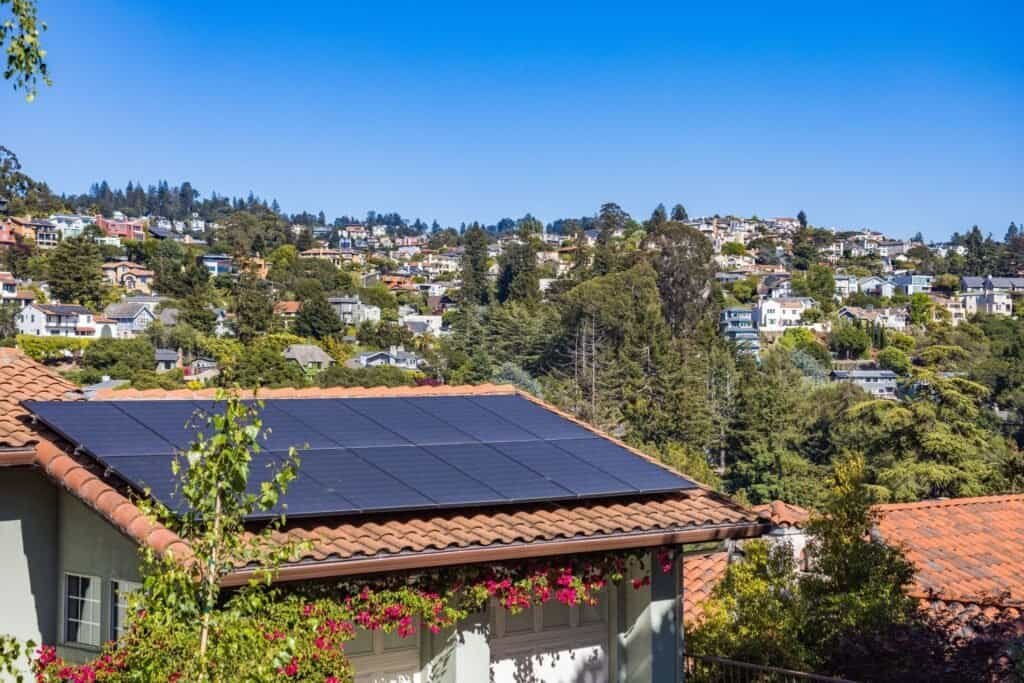
Head-to-Head: Choosing Your Solar Mounting System (2026 Guide)
When you’re comparing solar quotes, the different racking brands can be hard to sort through. Here’s a side-by-side look at how the main mounting systems perform under real Las Vegas Valley conditions—115°F summers, monsoon wind gusts, and Clark County building codes.
| System | Best Roof Type | Wind Security | Estimated Cost / Watt | Install Speed | Desert Durability | Best For | Warranty |
| IronRidge XR100 | Concrete Tile | Outstanding (110+ mph) | $0.45 – $0.65 | Average | Outstanding | Most Las Vegas & NLV tile homes | 25 Years |
| SnapNrack Ultra | Tile & Flat | Very Good | $0.35 – $0.55 | Fast | Very Good | Homeowners wanting a sleek, low profile | 20–25 Years |
| Unirac SolarMount / RM | Tile & Flat | Outstanding | $0.50 – $0.70 | Average | Excellent | Large setups or complex, multi-angled roofs | 25 Years |
| IronRidge BX Ballasted | Flat / Low-Slope | Outstanding | $0.45 – $0.70 | Quick | Outstanding | Flat roofs where you want zero roof holes | 25 Years |
| EcoFasten / Esdec | Flat / Low-Slope | Good | $0.35 – $0.55 | Very Fast | Good | Lightweight roofs with weight restrictions | 15–20 Years |
Solar Mounting Costs & ROI in Las Vegas (2026 Guide)
When you look at a solar quote, the mounting hardware usually makes up just 10% to 18% of the total project cost. However, because it’s a smaller line item, it’s easy to overlook. In a desert climate like Southern Nevada, though, the racking has a real long-term effect. The right foundation influences how much power the panels produce, how well the roof holds up, and how quickly the system pays for itself.
The ROI Analysis: Why Quality Racking Pays for Itself
Choosing a higher-quality mounting system such as IronRidge or Unirac usually adds about $800 to $1,800 to the upfront cost compared with generic hardware. Here’s why that upgrade can still improve the overall return:
1. Short-Term Production Boost (2 to 4 Year Payback)
Cheap racking often mounts panels nearly flush to the roof to save material, which restricts airflow. Premium systems are designed to leave a calculated gap underneath. In Las Vegas, where summer roof temperatures can climb past 150°F, that extra space helps keep the panels cooler. Because panels lose efficiency as they heat up, better airflow can improve annual energy production by 5% to 12%. The additional generation typically covers the cost of the better racking within the first few years.
2. Long-Term Expense Protection (25-Year Value)
- Mitigating O&M Expenses: Budget line-item hardware compromises are a false economy in the desert. Subpar mounting gear can warp or loosen during extreme thermal cycles, requiring out-of-warranty truck rolls to tighten loose rails, replace cracked concrete tiles, or repair roof leaks that typically cost $500 to $1,500 per incident. Deploying structural-grade racking mitigates these recurring maintenance liabilities, safeguarding an estimated $3,000 to $8,000 in operational savings over the system’s 25-year service life.
- Maximizing Lifetime Yield: Under NV Energy’s NMR-405 Tier 4 rate structure (75% export credit) and Southern Nevada’s daily demand pricing rules, every kilowatt-hour generated and self-consumed retains maximum financial utility. Maintaining optimal array tilt and structural integrity prevents sag and dust-trapping pitch degradation, delivering $8,000 to $18,000 in additional lifetime cumulative savings compared to compromised installations.
Local Factors That Shift the Price Tag
Your final engineering quote will depend on a few local factors:
- Roof Complexity & Architectural Friction: Roof planes interrupted by gables, hip valleys, dormers, or high-density HVAC penetrations require custom rail cuts, additional splice fittings, and localized attachment points. This added geometric layout friction can increase structural mounting labor costs by 15% to 30%.
- Tile Degradation & Vintage Underlayment: Older residential properties—particularly in established North Las Vegas and east-side neighborhoods—often feature sun-baked, brittle concrete tiles and aged paper underlayment. Installation teams must operate with extreme care, executing individual tile replacements and underlayment patching on the fly, which significantly inflates specialized tile-handling labor fees.
- Clark County Code Compliance: Homes located in exposed wind zones, elevated foothills, or high-velocity mountain corridors (such as Summerlin or parts of Henderson) must satisfy strict ASCE 7 structural standards for 115 mph design wind speeds. To maintain structural permit approval and property insurance compliance, these layouts mandate tighter rafter attachment spacing and supplementary mechanical anchors.
Real Local Impact: A homeowner in the Aliante neighborhood of North Las Vegas faced this choice on a Spanish tile roof. Upgrading to an IronRidge XR1000 heavy-duty rail system added roughly $1,400 to the quote. However, with better panel tilt and airflow, the system produced about 9% more energy annually than standard estimates. The premium hardware paid for itself in about three and a half years and came through its first summer monsoon season with no loose bolts.

Nail the Installation & Keep NV Energy Happy
Even the best mounting hardware is only as good as the person installing it. In the Mojave Desert, a poor install tends to show up quickly—whether as a leaky tile roof during an August monsoon or a delayed utility approval that keeps the system offline for months. Here’s what matters for getting the racking installed correctly, passing Clark County inspections, and securing timely utility approval.
Best Practices for Concrete Tile Roofs
If you’re installing solar on Spanish or flat concrete tile, the crew should treat the roof carefully:
- The “No-Cut” Rule for Tiles: Avoid contractors who propose grinding or notching concrete tiles with a saw to force low-grade hooks into position, as compromising the tile profile weakens its structural integrity and leads to wind-driven water intrusion. Top-tier installers utilize height-adjustable, profile-specific tile hooks or modular tile-replacement flashings (such as IronRidge All Tile Hook or Unirac SolarHooks) that curve cleanly from underneath the overlap without modifying the tile.
- Mandatory Sub-Flashing Integrity: Because concrete and clay tiles function primarily as water-shedding surface shields rather than waterproof membranes, water routinely flows along the underlayment during high-volume rains. Professional installation teams remove tiles at each attachment point, secure an engineered metal sub-flashing plate over the deck underlayment membrane, execute a complete weather-tight seal, and reinstall the tile over the assembly.
- Thermal Airflow Clearance: Installers must preserve a strict 2- to 3-inch convective air gap between the roof tile surface and the underside of the solar modules. Choking off this ventilation channel traps ambient rooftop heat—which can top 140°F during Southern Nevada summers—accelerating high-temperature voltage drop and degrading annual energy yield.
- Desert-Rated Elastomeric Sealants: Standard exterior silicones and asphalt caulks rapidly dry out, craze, and turn to powder under Southern Nevada’s intense UV radiation index. Every structural roof penetration must be sealed exclusively with commercial-grade, non-sag polyurethane or advanced hybrid polymer solar sealants rated for extreme UV resistance and 200°F+ thermal cycling.
Best Practices for Flat Roofs
Flat roofs are simpler to work on, but they leave little margin for error when it comes to structural weight and wind loads:
- Mandatory Structural Load Assessment: Concrete ballast blocks add substantial dead load to a low-slope roof deck. Prior to mounting hardware or staging ballast, a licensed structural engineer must review truss span tables and roof load limits to verify the framing can support both array dead weight and Clark County ASCE 7 localized wind uplift loads.
- Membrane Protection & Separation: Thermal expansion cycles and array micro-movements can cause metal ballast trays to chafe or puncture TPO, PVC, or built-up roof membranes over time. Installers must lay high-density EPDM protection mats or membrane-compatible UV-stable slip sheets beneath every single structural point of contact.
- Perimeter Setbacks & Code Compliance: Under Clark County building and fire codes (IFC 1205 / IRC R329), ballasted low-slope arrays must preserve designated perimeter setbacks (typically 4-foot clear edge access routes on commercial-scale roofs or standard 36-inch pathways/ridge clearances for residential planes). Centering the array maintains emergency firefighter access routes, prevents drainage obstruction, and ensures plan approval.
Post-Install Maintenance Tip
Once the system is live, remember that flat or low-sloped panels in Vegas collect a heavy layer of desert dust. Plan to rinse them gently two to four times a year, early in the morning when the glass is cool, to keep production closer to full output.
Thank you for reading! If you have any feedback or a specific Nevada solar topic you’d like us to cover next, please reach out directly at admin@nevadasolarguide.com.