Rooftop solar is not feasible for many Nevada customers as renters cannot install equipment on property they do not own and low-income households may face credit, capital, or ownership constraints. Homeowners may be limited by shading, roof condition, or homeowners’ association rules. The Expanded Solar Access Program (ESAP) provides a lower program energy rate for eligible customers without requiring the customer to purchase or install solar equipment. The program is supported by utility-scale solar resources and Community Based Solar Resources (CBSR). This guide describes ESAP eligibility, billing treatment, and the application process as of 2026.
Note: To keep up with fast-moving solar trends in Nevada, I use AI tools to help with research and writing. Every post is personally reviewed and edited by me.
What Is the Expanded Solar Access Program
The Expanded Solar Access Program (ESAP) is NV Energy’s primary tool for delivering solar energy benefits to customers who cannot install panels on their own property. Instead of requiring rooftop ownership, credit approval, or landlord permission, ESAP works through a special rate structure that lowers the cost of the energy portion of the bill for eligible participants.
Rate Structure Rather Than Subscription
Unlike traditional community solar programs in some other states—where customers subscribe to a share of a specific solar farm and receive complex kilowatt-hour credits—ESAP operates with direct simplicity. Selected customers remain on their normal NV Energy account and receive their monthly power bills as usual.
The key difference lies in how energy usage is billed: a discounted program energy rate replaces the standard Base Tariff Energy Rate (BTER) and associated rate adjustments for the electricity consumed. Because this program rate is locked in lower than the standard utility rate, participating households receive guaranteed savings directly on the energy component of their monthly bill without tracking external credits.
Supporting Solar Resources
The lower rate provided by ESAP is directly backed by clean solar generation that NV Energy integrates into its system grid. This supply relies on two core pillars:
- Utility-Scale Solar Infrastructure: High-capacity, centralized solar farms deployed across regional transmission corridors, engineered to deliver bulk renewable generation to the power grid at optimal economy-of-scale production costs.
- Community-Based Solar Resources (CBSR): Distributed, localized solar arrays installed directly on public and civic host sites—such as schools, municipal buildings, small businesses, and non-profit centers—designed to expand community resiliency and supply designated utility equity programs.
By pairing large-scale energy production with neighborhood-level community projects, the utility can offer the discounted ESAP rate while expanding Nevada’s overall clean energy infrastructure.
Program Purpose and Eligibility
Solar benefits have historically been more accessible to property owners with available capital and credit. ESAP was established to expand access for low-income and underserved customers.
- Multi-Family and Single-Family Renters: Tenants lower ongoing monthly utility expenses without requiring landlord approval, long-term lease commitments, or invasive structural modifications to the leased property.
- Income-Qualified Households: Families under tight budgetary constraints access guaranteed electricity rate discounts without taking on solar loan debt, credit checks, or upfront hardware and installation fees.
- Properties Unsuited for Rooftop Arrays: Homeowners with heavily shaded roofs, compromised structural integrity, suboptimal roof orientation, or restrictive Homeowners Association (HOA) covenants can fully participate in solar energy savings without modifying their homes.
By providing a rate discount rather than requiring system ownership, ESAP avoids customer capital outlay, credit requirements, maintenance obligations, and physical installation constraints.
Program Capacity Limits
To ensure the program remains financially sustainable and provides meaningful savings to participants, ESAP operates with strict program caps set by state regulators:
- Regional Limits: Annual program capacity is capped separately for Northern Nevada (NV Energy Sierra Pacific) and Southern Nevada (NV Energy Nevada Power).
- Lottery Selection: Because demand for lower energy rates often exceeds available capacity, participation is frequently determined by a randomized lottery system when enrollment windows open.
- Targeted Allocations: Specific percentages of the total capacity are reserved exclusively for low-income residential customers and disadvantaged community host sites to ensure the benefits reach those who need them most.
Eligibility: Low-Income Households and Renters
Eligibility is limited to low-income households and certain renters. Review the criteria below before applying.
Low-Income Residential Customers
Primary eligibility is based on household income at or below 80% of Area Median Income (AMI) under HUD guidelines. Participation in certain assistance programs can be used to verify income eligibility.
- Supplemental Nutrition Assistance Program (SNAP): Provides monthly food-purchasing assistance to low-income individuals and families to maintain adequate nutritional security.
- Medicaid: Offers comprehensive healthcare coverage and medical assistance for low-income adults, children, pregnant women, elderly adults, and people with disabilities.
- Temporary Assistance for Needy Families (TANF): Delivers time-limited financial support, child care assistance, and job-preparation services to help low-income families achieve financial independence.
- Special Supplemental Nutrition Program for Women, Infants, and Children (WIC): Delivers targeted supplemental foods, nutrition education, and healthcare referrals for income-eligible pregnant, postpartum, and breastfeeding women, as well as infants and children up to age five.
Income verification documentation may be submitted if the customer is not enrolled in a qualifying assistance program. A portion of program capacity is reserved for low-income participants.
Renters
Renters may participate if they meet the income requirements and are the named account holder, and no landlord permission is required because no equipment is installed on the property. Participation is tied to the account and does not transfer with the property.
Other Qualifying Categories
While low-income households get top priority, ESAP also sets aside limited spots for:
- Properties Ineligible for Rooftop Solar Deployment: Residential properties restricted from direct equipment installation due to severe microclimatic shading, incompatible roofing materials or structural limitations, or stringent Homeowners Association (HOA) architectural covenants.
- Disadvantaged Business Entities and Community Non-Profits: Qualifying small businesses and non-profit organizations operating within or directly serving historically under-resourced and economically marginalized communities.
Documentation requirements and capacity availability for secondary categories may change. Verify current program details before applying.
For more details about solar savings & incentives, explore our 2026 guides on Group-Buy Solar Programs, Selling Solar Excess Power, and Community Based Solar Resources.
Billing Treatment
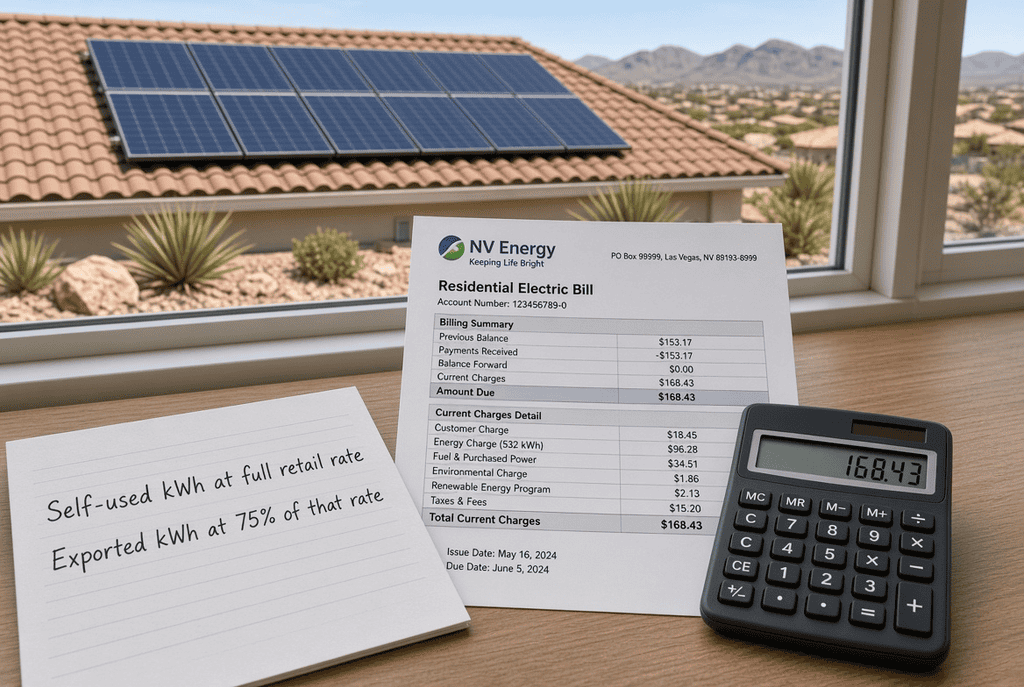
The bill is composed of multiple components. The ESAP discount applies only to the energy usage portion.
- Expanded Solar Energy Rate (ESER) Discount: A direct, discounted per-kilowatt-hour (kWh) rate applied strictly to the volumetric volumetric energy consumption drawn from the grid.
- Unadjusted Base Utility Charges: Non-volumetric rate components—such as fixed monthly basic service charges, local franchise fees, government taxes, and standard regulatory surcharges—remain unchanged at normal utility rates.
Fixed fees are not discounted. An 8–10% reduction on the energy rate does not reduce the total bill by the same percentage and dollar savings scale with energy usage.
Savings Estimate
Recent rate updates in 2025 and 2026 put the ESAP energy rate discount around 8% to 10% lower than standard residential rates. The exact percentage shifts slightly depending on whether you live in a single-family home or an apartment, as well as seasonal rate adjustments.
Zero Hidden Fees or Subscriptions
Unlike third-party green energy plans, there are no additional subscription fees or contract terms.
- Zero Initial or Ongoing Subscription Fees: Absolute zero-cost enrollment and ongoing program maintenance, requiring no recurring membership or subscription obligations.
- Complete Hardware and Operational Liability Exemption: Zero financial exposure to capital equipment expenditures, ongoing system maintenance, inverter replacement costs, or structural property insurance requirements.
- Automated Monthly Rate Application: Seamless billing integration ensures the discounted Expanded Solar Energy Rate (ESER) applies directly to volumetric energy charges on standard utility statements upon confirmed account enrollment.

Capacity Limits and the Lottery Process
Enrollment is subject to capacity limits established by regulators. Limits are designed to maintain the value of the discount for participating customers.
Regional Capacity Caps
Program limits are split between the two main regions of the state:
- Southern Nevada Capacity Allocation (Nevada Power Territory): Allocated the primary share of statewide program capacity—capped at approximately 240,000 megawatt-hours (MWh) annually—to accommodate the higher population density and concentrated energy demand of the Las Vegas metropolitan area.
- Northern Nevada Capacity Allocation (Sierra Pacific Power Territory): Assigned a dedicated annual allocation of approximately 160,000 megawatt-hours (MWh) to support qualifying residential subscribers and community host sites across the northern utility service area.
These numbers represent the total amount of energy NV Energy can discount under the program each year. A portion of capacity is reserved while the remainder is available for new enrollments.
Reserved Spots for Priority Groups
Capacity is allocated across customer categories. The majority is reserved for low-income households and renters while smaller allocations are available for disadvantaged small businesses, nonprofits, and customers with roofs unsuitable for solar.
How the Lottery Works
Demand for the program exceeds available capacity. Participants are selected through a randomized lottery.
- When Demand Exceeds Available Spots (Lottery Selection): If more eligible households apply during an open sign-up window than the program can accommodate, all verified applications enter a fair, randomized drawing to fill the available openings.
- When Spots Are Available (Automatic Enrollment): If the number of applications is lower than the available program capacity, every applicant who meets the eligibility criteria is automatically enrolled.
Application Windows and Timing
Primary enrollment windows typically open in the fall for the following program year. Mid-year enrollment periods may be opened if additional capacity becomes available. Applications submitted outside an open window or with incomplete documentation are not processed until the next enrollment period.
Connection to Community Based Solar Resources
The Expanded Solar Access Program is supported by Community Based Solar Resources. These are smaller solar projects located within the communities they serve.
Community Based Solar Resources
CBSR installations are smaller-scale solar facilities sited on host properties within local communities rather than remote utility-scale locations. Examples include:
- Public high schools and community colleges
- Municipal buildings and city facilities
- Local businesses and non-profit centers
NV Energy constructs, owns, and maintains the systems. Generation is interconnected to the local distribution system and supports the energy volume available under the program.
Setup Advantages
Linking neighborhood solar projects to ESAP solves two problems at once:
- Local Clean Energy Infrastructure: The program funds new, localized solar arrays installed directly on schools, public facilities, and businesses across Nevada, expanding clean energy production right in our neighborhoods.
- Targeted Bill Relief: Instead of sending clean power into the general regional grid, ESAP channels the direct financial savings straight to renters, income-qualified families, and households with unsuited roofs—reducing monthly power bills where relief is needed most.
CBSR projects supply generation that supports the program. Host sites provide the location. Enrolled customers receive the discounted rate without installing equipment.

How to Apply and What Documents You Need
Applications must be submitted during an open enrollment window. Complete applications are required for lottery consideration.
1.Check the Open Application Windows: Applications submitted after the enrollment window closes are not processed.
Enrollment isn’t open year-round. NV Energy opens application windows periodically—usually holding a primary round in the fall for the upcoming program year, along with occasional mid-year openings. Always check the official NV Energy ESAP portal first to make sure an enrollment window is currently open before gathering your paperwork.
2.Gather Your Supporting Documents: Documentation requirements vary by eligibility category.
- Income-Qualified Households: Proof of household earnings at or below 80% of the Area Median Income (AMI). Show active enrollment in qualifying assistance programs—such as SNAP, Medicaid, TANF, or WIC—or provide recent pay stubs or tax returns.
- Renters & Apartment Residents: A current lease agreement (if requested) alongside standard income verification documents. The primary applicant’s name must match the account holder listed on the NV Energy utility statement.
- Homes Unsuited for Rooftop Solar: Basic documentation or certification detailing why your property cannot host physical panels, such as heavy tree shade, structural roof limitations, or Homeowners Association (HOA) architectural restrictions.
- Businesses & Non-Profit Host Sites: Active business licensing, official tax-exempt status documentation (for non-profits), or completed eligibility affidavits confirming organization status.
3.Submit Your Complete Application: Applications may be submitted online, by email, or by mail. Incomplete applications are not processed. Retain a copy of the submission.
4.Wait for Selection Notification: Applications are reviewed after the window closes and a lottery is used if applications exceed available capacity. NV Energy notifies applicants of the outcome.
Enrollment Considerations
Enrollment depends on eligibility, complete documentation, and submission during an open window. Preparation and timing determine the outcome.
Mark Your Calendar for Application Windows
ESAP isn’t an open-enrollment program you can join at any time. Primary application rounds usually open in the fall for the following program year, with occasional mid-year openings when extra capacity frees up. Bookmark the official NV Energy ESAP page and check back regularly—missing a deadline means waiting until the next official cycle.
Get Your Paperwork Ready Ahead of Time
Don’t wait until the enrollment window opens to start hunting down document files. Gather your proof of income, assistance program award letters (like SNAP, Medicaid, or WIC), and current NV Energy bill details in advance. Having everything prepped lets you submit your form the moment the portal opens, avoiding delays or disqualification over missing files.
Keep the Lottery System in Mind
Because demand for lower utility rates almost always tops available capacity, spots are often assigned through a randomized lottery. While submitting your paperwork on time is essential, it doesn’t automatically guarantee selection. Treat each enrollment window as a great opportunity but keep realistic expectations.
Understand What Your Savings Will Look Like
Remember that the ESAP discount applies specifically to your energy usage charges—not your entire final balance. Fixed service fees and local taxes remain standard. You won’t see a zero-dollar bill, but you will get a steady, guaranteed rate reduction every month without spending a penny on solar panels or maintenance.
Stick to Official NV Energy Updates
Program guidelines, income limits, and accepted document lists are reviewed and updated regularly by state utility regulators. Always rely on NV Energy’s official ESAP portal for current deadlines and forms rather than third-party summaries or outdated articles.
Ready to take the next step? Head over to Expanded Solar Access Program (ESAP) | NV Energy to check current eligibility limits, download the latest application forms, and see when the next enrollment window opens.
Thank you for reading! If you have any feedback or a specific Nevada solar topic you’d like us to cover next, please reach out directly at admin@nevadasolarguide.com.