Top Budget Solar Panels for Nevada 2026: Full Cost vs Savings Breakdown

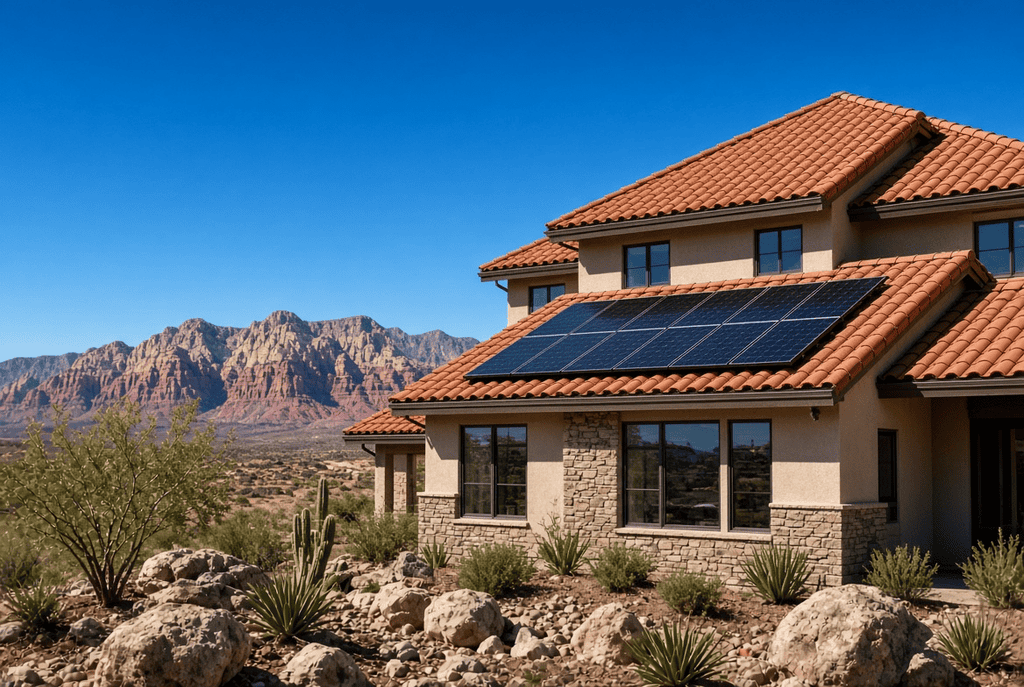
Budget Solar Panels for Nevada on a North Las Vegas home.

Thinking about going solar in North Las Vegas but dreading the massive price tag? Good news: you don’t have to spend a fortune anymore. Budget-friendly solar panels have gotten seriously good lately. They are tough enough to handle our brutal summer heat and efficient enough to get you a quick return on your investment—especially with NV Energy’s 75% net metering credit.

In this guide, we’re breaking down the best affordable budget solar panels for Nevada homeowners. No confusing jargon, just honest talk about real installation costs, actual savings, and long-term value so you can make the right choice for your home and your wallet.

Why Budget Panels Make Sense in Nevada 2026

A lot of homeowners in North Las Vegas think they have to drop top-dollar on premium solar brands just to survive our brutal summers. That used to be true, but it isn’t anymore. Budget-friendly panels have come a long way in terms of toughness and efficiency. Honestly, going the affordable route is often the smartest financial move you can make out here.

Here is why skipping the premium price tag makes sense:

  • Our sunshine does the heavy lifting: Southern Nevada gets incredible sun—about 5.5 to 6.5 peak hours a day. Because we have so much raw sunshine, even a standard 20–22% efficiency panel is going to crank out massive amounts of power. A typical 8 kW budget system can easily save you anywhere from $2,000 to $2,900 a year on your NV Energy bills.
  • You save thousands upfront: Going with a reliable budget brand can easily save you $4,000 to $8,000 right out of the gate compared to premium tiers. Once you factor in the 30% federal tax credit and Nevada’s local tax exemptions, a solid system usually lands around $12,500 to $18,000 out of pocket. That means the system pays itself off in just 6 to 9 years.
  • They are built for the desert heat: Modern budget panels (from trusted names like Canadian Solar, Trina, and JA Solar) are explicitly engineered for places like Vegas. They feature advanced coatings to fight off dust and heat degradation, and they come with 25-year warranties. Real-world data shows that during our hottest summer peaks, these panels only lose a tiny fraction more production than systems costing twice as much.
  • Smart pairing beats overpriced panels: With NV Energy’s current 75% net metering rate and shifting demand charges, the trick isn’t buying the most expensive panel—it’s about how you use your power. Pairing a budget panel with a great inverter (like Enphase or SolarEdge) gives you the exact same smart-home benefits for way less money.
  • Less financial stress: If you aren’t sure this is your “forever home,” or you’re just hesitant to take on massive solar debt, a budget system slashes your financial risk while still wiping out your power bill from day one.

The Bottom Line Choosing a budget-friendly solar system doesn’t mean you’re cutting corners. You’re getting a durable, desert-tested system that slashes your NV Energy bill and pays for itself years faster—leaving more cash in your pocket where it belongs.

For more details about solar panels, explore our 2026 guides on the best solar panel mounting systems, a complete solar panel cost guide, and top 7 solar panel brands to avoid.

The Best Value Solar Panels for Nevada (2026 Picks)

You don’t need luxury-tier equipment to build a great solar setup. In 2026, the budget solar market is packed with reliable options that handle the unique chaos of Southern Nevada’s climate—namely triple-digit heat, relentless dust storms, and heavy UV exposure.

Here are the top affordable brands performing exceptionally well in the Las Vegas Valley right now.

1. Canadian Solar (HiKu / HiHero Series)

  • The Numbers: ~20.5% to 22.5% efficiency | Excellent heat tolerance (–0.27% to –0.29%/°C temperature coefficient) | 25 to 30-year warranty.
  • Price Guide: ~$0.75 – $0.95 per watt
  • Why they thrive in the desert: Canadian Solar is a massive industry staple with a phenomenal track record in the Southwest. If you have a desert yard or ground-mounted setup, their “bifacial” panels can grab an extra 5% to 15% more power just from the sun bouncing off the dirt. Local installers love them because they take a beating from multiple 115°F+ summers without losing their edge.

2. Renogy

  • The Numbers: ~20% to 22% efficiency | Decent heat tolerance (–0.35%/°C) | 25-year warranty.
  • Price Guide: ~$0.65 – $0.85 per watt
  • Why they thrive in the desert: Renogy is the ultimate crowd-pleaser for DIYers or anyone looking for maximum flexibility. They are highly popular for custom ground mounts or smaller, expandable setups in North Las Vegas. If you want a straightforward, no-nonsense system you can easily add onto later, this is a very cost-effective way to do it.

3. Trina Solar (Vertex S / Tallmax)

  • The Numbers: ~20.8% to 22.3% efficiency | Great heat tolerance (–0.29% to –0.34%/°C) | 25-year warranty.
  • Price Guide: ~$0.70 – $0.90 per watt
  • Why they thrive in the desert: Trina’s big selling point out here is their glass coating, which is specifically designed to shed dust easily. Anyone who has lived through a Vegas dust storm knows how fast a layer of grime can tank your solar production. They also feature great internal tech that keeps the panels from degrading early under harsh, constant sunlight.

4. JA Solar

  • The Numbers: ~21% to 22.8% efficiency | Reliable heat tolerance (–0.32%/°C) | 25-year warranty.
  • Price Guide: ~$0.72 – $0.92 per watt
  • Why they thrive in the desert: JA Solar panels are the ultimate workhorses. They offer an incredible balance of high efficiency for a lower price tag. They love intense, direct sunlight and give you a premium-level energy output without making you pay the premium brand tax.

5. Signature Solar & Qcells (Entry-Level Models)

  • The Numbers: Solid mid-tier specs at a entry-level price point.
  • Why they thrive in the desert: Qcells (especially their budget-friendly lines) and Signature Solar options are incredibly easy to source through local Nevada suppliers, which keeps delivery times fast. They pair beautifully with industry-standard smart inverters like Enphase or SolarEdge, making them a very safe, reliable middle-of-the-road choice.

Real-World Expectations for Local Homeowners

Let’s look at how these panels actually behave once they’re on your roof. When it hits 115°F in July, all solar panels take a slight hit from the heat—even the most expensive ones on the market. These budget options are so well-engineered now that they still crank out 88% to 94% of their maximum power on our hottest days.

To keep them running like a charm, just rinse the dust off them 2 to 4 times a year to protect your savings. At the end of the day, you don’t need to overspend to get a reliable, long-lasting system. The real secret is just picking a reputable brand like the ones above and working with a solid, experienced local installer who knows how to wire things correctly for the Nevada climate.

An example of the extreme heat & dust Nevadans experience.

How Budget Panels Handle the Real Vegas Test: Heat & Dust

If you live in Southern Nevada, you already know our climate is brutal. Between the blazing summer heat, intense UV rays, and random dust storms, North Las Vegas is essentially the ultimate proving ground for solar panels.

The good news? In 2026, budget-friendly panels have almost completely closed the performance gap with those overpriced luxury brands. Here is an honest look at how the top affordable options actually hold up under the local elements.

1. The Summer Heat Test (The Big One)

On a 115°F July day, your roof can easily soar past 140°F to 160°F. When solar panels get that hot, they naturally lose a little efficiency (a metric called the “temperature coefficient”). The lower this number is, the better the panel handles the heat.

Here is how they stack up in the real world:

  • Canadian Solar (–0.29%/°C): This is the gold standard for budget panels. Even during our worst heatwaves, you can expect only an 8% to 12% drop in power. Local data shows these things are absolute tanks in the summer.
  • JA Solar (–0.32%/°C): Incredibly competitive. They hold their ground exceptionally well even when we get those long, consecutive stretches of triple-digit days.
  • Trina Solar (–0.34%/°C): A very solid performer. Plus, if you have light-colored desert gravel in your yard, their panels are great at catching reflected light to make up for any minor heat losses.
  • Renogy (–0.35%/°C): They take a slightly bigger hit from the heat than the others, but they are still highly capable—especially if your installer pairs them with high-quality microinverters to keep the power flowing efficiently.

The Reality Check: When properly installed with good airflow, a solid budget system out here will still crank out 87% to 94% of its maximum capacity during the absolute hottest months of the year.

2. The Dust Storm Test

We all know how fast a layer of desert dust can coat everything out here. If you let dirt pile up on your panels, your energy production can drop by 5% to 20%.

  • Trina & Canadian Solar: Both of these brands use specialized, slick coatings that help dust slide right off. When we do get the occasional quick rain shower, a lot of the dirt washes away naturally.
  • JA Solar: They feature great self-cleaning glass tech that prevents dust from baking onto the surface quite as easily.
  • Renogy: Extremely durable panels, but if you live in windier, dust-heavy neighborhoods like Aliante or Centennial Hills, you might find yourself needing to hose them down just a little more often.

Local Pro-Tip: Plan on giving your panels a quick rinse 2 to 4 times a year. Doing this simple bit of upkeep easily recovers 4% to 8% of your annual power production—which translates directly to a lower power bill.

The Verdict: How to Choose

If you are looking at the budget tier for a North Las Vegas home, here is the quick cheat sheet:

  1. Canadian Solar: The best all-around choice for beating the heat and dust.
  2. JA Solar: The perfect middle-ground for reliability and cost.
  3. Trina Solar: Great if you have a rock yard and can benefit from reflected sunlight.
  4. Renogy: The ultimate money-saver, though they require a tiny bit more cleaning maintenance.

The Bottom Line: When you pair these budget panels with smart inverters (like Enphase or SolarEdge), they perform shockingly close to systems that cost twice as much. Instead of dropping a fortune on luxury panels, going the budget route lets you buy a slightly larger system for the exact same money—giving you way more bang for your buck.

Here is a rewrite that turns this dry invoice list into an easy-to-read, realistic breakdown of what a local homeowner will actually spend and save.

The Real Cost Breakdown (Equipment, Labor, & Perks)

Let’s talk about real numbers. Below is a practical, line-by-line look at what it actually costs to install a budget solar setup in North Las Vegas.

We’ll base this on a 8 kW system, which is the standard size for a typical 3 to 4-bedroom home in our area.

1. The Gear (Panels & Inverters)

  • The Panels: Trusted names like Canadian Solar, Trina, or JA Solar will cost around $5,200 to $7,800.
  • The Brains (Inverter): Standard smart inverters (like SolarEdge or Enphase IQ) run $2,800 to $4,500.
  • The Extras: Racking, heavy-duty wiring, optimizers, and performance monitoring software add $1,800 to $2,800.
  • Total Gear Cost: $9,800 to $15,100

2. Labor, Permits, & Red Tape

  • Labor & Installation: Putting panels on a roof out here requires desert-specific racking to withstand our intense summer heat and sudden high-wind advisories. This runs $5,500 to $8,500.
  • The Paperwork: City permits, local inspections, and NV Energy’s hookup fees usually total $800 to $1,500.
  • Total Setup Cost: $6,300 to $10,000

The Grand Total: Before vs. After Incentives

If you look at the raw price tag before discounts, you’re looking at a total project cost of $16,100 to $25,100 (roughly $2.01 to $3.14 per watt).

But nobody actually pays full price. Here is how the incentives cut that number down:

  • The 30% Federal Tax Credit: This shaves a massive $4,830 to $7,530 right off what you owe in federal taxes.
  • Nevada Sales Tax Exemption: You save a clean 8.375% on the equipment and labor because Nevada doesn’t charge sales tax on solar components.
  • Nevada Property Tax Exemption: Adding solar increases your home’s equity, but the state legally prevents your property taxes from going up because of it.
  • Installer Rebates: Many local contractors throw in an extra $500 to $1,500 in seasonal promos.

Your Actual Out-of-Pocket Net Cost: $11,800 to $17,900

Going this route easily saves you $3,000 to $6,000 upfront compared to buying a premium luxury-brand system of the exact same size.

What Could Shift Your Final Price?

Every house in the Las Vegas Valley is a little different. A few local factors might nudge your estimate up or down:

  • Your Roof Type: Spanish tile roofs are beautiful, but they require extra care and special mounts. Expect to add $500 to $1,500 for a tile roof installation compared to standard shingles.
  • Inverter Selection: Opting for a centralized SolarEdge system is generally a bit cheaper upfront than individual Enphase microinverters, making it the go-to pairing for a budget build.
  • Adding a Battery: If you want backup power or want to completely master NV Energy’s new demand charges, adding a battery will tack on another $10,000 to $16,000. It bumps your upfront cost, but it maximizes your day-to-day savings.

A Quick Real-World Example

To put this into perspective, a homeowner over in North Las Vegas recently installed an 8.2 kW system using Canadian Solar panels and a SolarEdge inverter. After their tax credits cleared, they paid $14,200 out of pocket. Because they are saving roughly $2,300 to $2,700 every year on electricity, their system is on track to completely pay itself off in just 5 to 6 years. Everything after that is pure profit.

What Do the Savings Look Like for North Las Vegas Homes?

Let’s skip the marketing math and look at how an 8 kW budget system performs in the real world under NV Energy’s current rates and those newly introduced daily demand charges.

Life Without Solar

A typical 3 to 4-bedroom home in North Las Vegas burns through about 900 to 1,200 kWh a month on average.

  • The Annual Damage: Expect to pay $2,800 to $3,800 a year.
  • The Problem: Most of that money evaporates during our brutal summer months when the AC runs 24/7, which is precisely when NV Energy’s peak rates and daily demand charges hit the hardest.

Life With a Budget Solar System (8 kW)

Even after factoring in real-world efficiency drops from summer heatwaves and layers of desert dust, an 8 kW system will comfortably crank out 13,000 to 15,800 kWh of clean power a year.

By using that power directly in your home and sending the extra back to the grid under NV Energy’s 75% net metering credit, you can slash your bill by $2,100 to $2,950 every single year.

  • Direct Power Savings: You save $1,650 to $2,300 simply by powering your home with your own roof instead of buying electricity from the grid.
  • Demand Charge Protection: You shave $200 to $450 off your bill by using solar power to flatten out your “peak” energy spikes (especially if you pair the system with a small battery).
  • Net Metering Credits: You bank $150 to $300 in credits from NV Energy for the extra power your system pushes back to the neighborhood grid.

The Payback Timeline: Breaking Even Fast

Because the upfront cost of budget panels is so low, your timeline to completely break even is incredibly short.

  • Upfront Investment: $11,800 to $17,900 out of pocket (after your 30% tax credit).
  • The Wait Time: Most local homeowners fully recover their investment in 5.8 to 8.2 years.

Because Nevada offers some of the best raw sunshine in the country, this is currently one of the fastest, most aggressive return-on-investments you can find anywhere in the U.S.

Looking 25 Years Down the Road

Once your system pays itself off in those first few years, you get 15 to 20 years of essentially free electricity. Even if utility rates only crawl up by a conservative 3% a year, a solid budget system will lock in $48,000 to $72,000 in total lifetime savings. And don’t worry about reliability—by year 25, reputable budget brands are still legally warrantied to produce 80% to 85% of their original day-one output.

Three Real Ways to Build It in North Las Vegas

  • The Standard Route (Canadian Solar + SolarEdge):
    • Net Cost: ~$13,800 | Annual Savings: ~$2,350 | Pays for itself in ~5.9 years.
    • The Vibe: The ultimate budget workhorse. Maximum bang for your buck.
  • The Future-Proof Route (System + Home Battery):
    • Net Cost: ~$24,000 | Annual Savings: $2,900+ | Pays for itself in 7.5 to 8.5 years.
    • The Vibe: Costlier upfront, but adding a battery protects you flawlessly against NV Energy’s daily demand charges and keeps your power on during summer grid blackouts.
  • The High-Energy Route (10 to 12 kW System):
    • The Vibe: If you have an electric vehicle, a backyard pool, or multiple AC units, scaling up to a larger budget system actually drops your cost-per-watt even lower, often pushing your break-even point under the 6-year mark.

What Changes the Math For You?

Keep in mind, your exact savings will fluctuate based on a few basic things: which way your roof faces (south is king out here), how much power you naturally use during daylight hours, and how often you hose the dust off your panels.

The Bottom Line: Even when you budget for the worst of our local heat and dust, a quality budget system is an absolute home run for your wallet. It’s an affordable way to opt out of rising utility costs while letting the Nevada sun pay off your investment in record time.

Many budget and premium panels in the Mojave Desert.

Head-to-Head: Budget vs. Premium Panels

How do these budget-friendly options actually hold up against the luxury-tier names (like REC, Meyer Burger, or Maxeon) that salespeople love to pitch? It’s easily one of the most common questions out here.

Let’s look at how they stack up in the real world—without the high-pressure sales pitch.

1. Raw Power vs. Panel Size

On a spec sheet, luxury panels have a slight edge. They usually hit 22.5% to 23.5% efficiency, while the best budget panels sit around 20% to 22%. On paper, that means a premium panel gives you about 5% to 10% more power from the exact same footprint.

The Real-World Plot Twist: Because budget panels cost a fraction of the price, you can often use your savings to simply buy a larger system. For the exact same budget it takes to buy a modest 8 kW premium system, you could install a 10 kW budget array. In the end, the slightly larger budget setup will actually crank out more total power over the year than the smaller luxury system.

2. Beating the 115°F Summer Heat

Rooftop temperatures in North Las Vegas can easily rocket past 140°F to 160°F in July. Premium panels are engineered with slightly better heat tolerance, meaning they degrade a tiny bit less during the absolute hottest part of the day.

The Reality Check: Budget options from names like Canadian Solar and JA Solar have gotten incredibly close. In practice, the difference in summer output between a premium panel and a modern budget panel is usually only about 3% to 8%. For most local families, a tiny single-digit gap in peak summer output isn’t worth paying thousands more upfront.

3. Warranties & Long-Term Wear

Premium brands are built like tanks and degrade very slowly—they often come with 25 to 40-year warranties that guarantee the panels will still hit 90% of their original output decades down the line. Budget panels typically carry a standard 25-year warranty and guarantee roughly 80% to 85% output at the end of it.

While the premium system will technically be slightly more potent in year 25, the budget system will have fully broken even and paid itself off years earlier. You reach pure profit much faster with a budget build.

The Financial Showdown

This is where the math leans heavily in favor of a budget system. Let’s look at the estimated out-of-pocket costs after the 30% tax credit:

System TierEst. Net Cost (8 kW System)Typical Payback Period
High-Quality Budget$12,000 – $18,0005.5 – 7.5 Years
Luxury Premium$18,000 – $24,000+9 – 12+ Years

That $5,000 to $8,000 difference stays right in your bank account. Or better yet, you can pocket the savings or redirect that cash into a home backup battery to completely protect yourself from NV Energy’s daily demand charges.

The Verdict

  • Go with Premium if: You have very limited roof space, plan on living in your home for the next 40 years, and want an ultra-sleek, all-black look regardless of the higher price tag.
  • Go with Budget if: You want the fastest possible return on your investment, a reliable system that is easily serviced by local Las Vegas installers, and a massive drop in your power bill without taking on a mountain of solar debt.

For most homeowners in the Valley, high-quality budget panels represent the absolute sweet spot for value. They handle our desert climate beautifully, pay for themselves in record time, and give you immediate relief from high utility bills without breaking the bank.

The Honest Truth: Pros, Cons, & Who This Is Actually For

Choosing a solar setup is a major decision, and it helps to look past the marketing hype. Let’s lay out the genuine advantages and drawbacks of going the budget route—tailored specifically for the realities of living in North Las Vegas.

The Good News (The Pros)

  • Massive Upfront Savings: You are instantly keeping $4,000 to $8,000 in your pocket compared to buying luxury brands. For an 8 kW system, that often means walking away with a total out-of-pocket cost under $15,000 once your tax credits kick in.
  • You Break Even Years Faster: Because you aren’t digging yourself out of a massive financial hole upfront, your system usually pays itself off in just 6 to 8 years.
  • Plenty of Power for Vegas: Modern tier-one budget panels (like Canadian Solar or Trina) handle our intense heat waves and dust storms incredibly well. The actual difference in day-to-day power production compared to a luxury panel is only about 5% to 10%—a gap you can easily erase by just adding one or two extra panels.
  • Great Warranties: You still get a standard 25-year warranty that guarantees the panels will hold 80% to 85% of their original power by two and a half decades from now.
  • Room in the Budget for a Battery: The money you save by skipping premium panels can be redirected into a home backup battery, which is a massive win for dodging NV Energy’s daily demand charges and keeping the AC on during a summer grid blackout.

The Trade-offs (The Cons)

  • They Take Up a Bit More Space: Because budget panels are slightly less efficient than luxury ones, you might need a few more square feet of roof space to get the exact same amount of power.
  • Slightly Faster Aging: Budget panels lose their steam just a tiny bit faster over time (losing about 0.4% to 0.5% of their capacity a year, compared to 0.25% for premium brands). They will still last for decades, but they won’t be quite as potent in year 25 as a luxury panel.
  • Curb Appeal: Budget panels don’t always feature that ultra-sleek, seamless “all-black” look. If you are highly particular about the exact aesthetic of your front roofline, you might find them a bit utilitarian.
  • A Tiny Bit More Hosing Down: In dust-heavy pockets of the Valley like Aliante or Centennial Hills, some budget models will require you to be a little more disciplined about hosing the summer dust off them to keep your production numbers high.

The Verdict: Which Camp Do You Fall Into?

You are a great candidate for a budget system if:

  • You want the fastest possible return on your investment and immediate breathing room on your monthly expenses.
  • You are a first-time solar buyer who wants to wipe out a high electric bill without taking on a mountain of solar debt.
  • You have plenty of open roof space to fit a slightly larger, cost-effective array.
  • You want to pair your solar with a battery now (or very soon) to completely optimize your savings against changing utility rates.

You might want to consider premium panels instead if:

  • Your roof is incredibly small or oddly shaped, and you need to squeeze absolutely every drop of power out of a tiny space.
  • You are deeply invested in the “all-black” luxury look for maximum curb appeal.
  • This is your absolute “forever home” where you plan to stay for the next 30+ years, and you value maximum power output over immediate savings.

The Bottom Line

For the vast majority of families living in North Las Vegas, high-quality budget panels are simply the smartest financial play. They handle the desert climate beautifully, pay for themselves in record time, and protect your wallet from rising energy costs without forcing you to overpay for tiny, marginal gains.

Final Recommendation + Next Steps

At the end of the day, if you’re a homeowner anywhere in the Las Vegas Valley, choosing a reliable budget brand like Canadian Solar or Renogy is easily one of the smartest moves you can make. They handle our desert summers beautifully, play perfectly by NV Energy’s rules, and give you the absolute best bang for your buck.

Curled up with a high power bill and want to see what the actual math looks like for your specific roof?

A quick heads-up: Some of the links in this post are affiliate links, which means I might earn a small commission if you decide to buy, at absolutely no extra cost to you. That said, I only recommend what works—all of these picks are backed by independent testing data.